Indian opposition backs nationwide student protests over NEET paper leak allegations
India's opposition has intensified pressure on Prime Minister Narendra Modi's government by backing a growing student-led protest movement over alleged examination paper leaks, as demonstrations spread nationwide and parliament faces repeated disruptions.
- Opposition lawmakers disrupted parliament demanding Education Minister Dharmendra Pradhan's resignation.
- Student protests over alleged NEET paper leaks have spread across multiple Indian cities.
- The movement has expanded beyond examination concerns to broader youth economic grievances.

NEW DELHI — Indian opposition lawmakers disrupted parliamentary proceedings on Wednesday (July 22) in support of a growing student-led protest movement demanding accountability over alleged examination paper leaks, increasing pressure on Prime Minister Narendra Modi’s government and Education Minister Dharmendra Pradhan.
Opposition leaders led by Congress leader Rahul Gandhi gathered outside the Parliament building in New Delhi, wearing black clothes and carrying placards calling for Pradhan’s resignation. They accused the government of failing to prevent repeated examination irregularities that have affected millions of students.
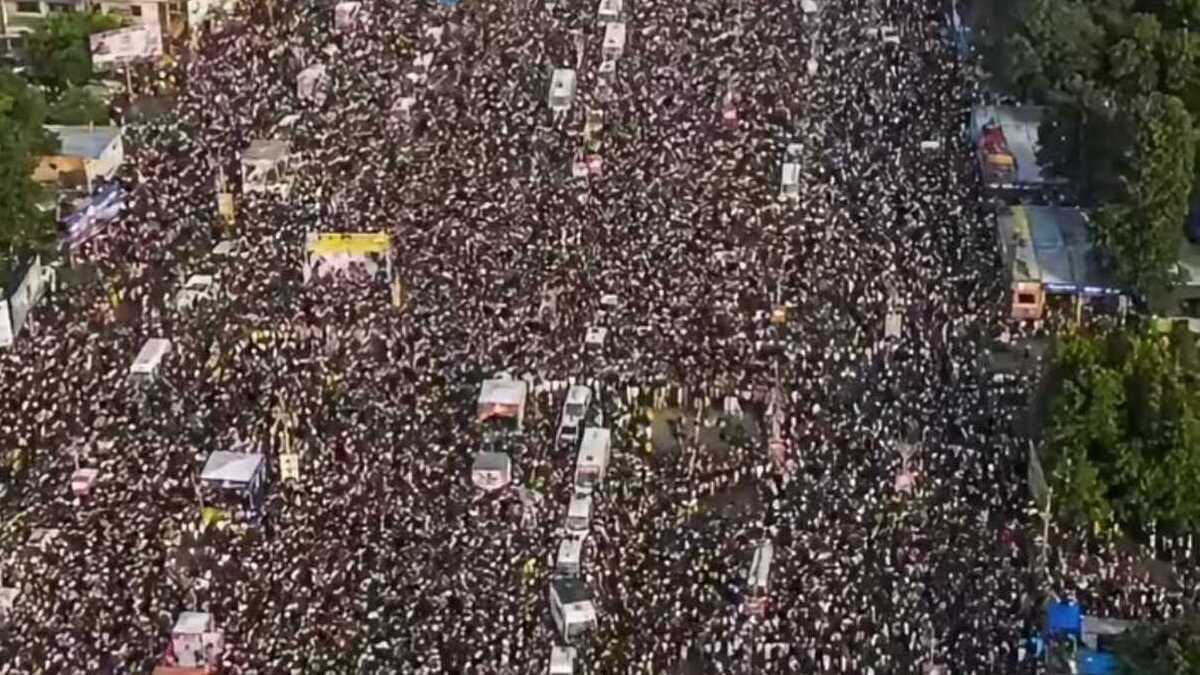
The protests began last month after allegations of leaks in the National Eligibility-cum-Entrance Test (NEET), India’s medical school entrance examination, which affected around two million candidates. The movement expanded this week after tens of thousands of young protesters took to the streets of New Delhi on Monday, with police using tear gas and batons to disperse demonstrators.
The demonstrations have since spread to cities including Mumbai, Bengaluru, Kolkata, Goa, Guwahati, Thiruvananthapuram, Jammu and Ahmedabad, creating one of the biggest youth-led challenges to Modi’s government since it came to power in 2014.
Opposition MPs demand education minister’s resignation
During Wednesday’s parliamentary session, opposition lawmakers shouted slogans and interrupted proceedings, forcing repeated suspensions in both the Lok Sabha, the lower house, and the Rajya Sabha, the upper house.
Gandhi told reporters that students were demanding the resignation of Education Minister Dharmendra Pradhan, accountability for police officers accused of using force against protesters in Delhi, and an apology from Prime Minister Modi.
“We are fully backing them. This is not negotiable under any circumstance,” Gandhi said.
The Congress party also organised a sit-in protest outside Modi’s residence on Tuesday. Police detained Gandhi, his sister Priyanka Gandhi Vadra, and several other opposition leaders during the demonstration before releasing them later.
The protest movement grew from an online campaign
The movement, known as the Cockroach Janta Party (CJP), began as an online satire campaign before becoming a wider youth protest movement. It initially involved only a few hundred participants but gained support as concerns over examination integrity and youth unemployment spread.
Thousands of protesters gathered again at Delhi’s Jantar Mantar protest site on Wednesday, waving Indian flags and chanting slogans demanding reforms to the education system.
Security remained high in the capital. The Delhi Metro Rail Corporation temporarily closed 16 stations in central areas before reopening them later in the evening.
The ruling Bharatiya Janata Party (BJP) also organised counter-protests against Congress in several cities. Local media reported clashes between rival groups, including stone throwing in Patna. Police used water cannons to disperse BJP protesters in Jaipur, Raipur and Thiruvananthapuram.
Government faces pressure over NEET paper leak allegations
The protests centre on allegations of irregularities in the National Eligibility-cum-Entrance Test (NEET), one of India’s most competitive examinations. The exam is taken annually by millions of students seeking admission to medical colleges.
The controversy has intensified concerns among students and opposition parties over repeated examination leaks, delays and cancellations that can affect academic futures.
The demonstrations have also expanded into wider concerns among young Indians over limited job opportunities, stagnant wages and rising living costs.
Education Minister Dharmendra Pradhan made his first public comments after calls for his resignation intensified, saying the government was committed to addressing concerns and reforming the examination system.
Pradhan, 57, is a senior BJP politician who has served as a minister since Modi first became prime minister in 2014. He has held several key portfolios and has been regarded as a potential future leader within the party.
Modi and the BJP have not responded directly to demands for Pradhan’s resignation.
Activist Sonam Wangchuk joins student protests
The movement gained further momentum after activist Sonam Wangchuk began an indefinite hunger strike on June 28 in support of student demands.
Police moved Wangchuk to a hospital on Saturday, and he was later transferred to a private hospital following a court order after a petition from his wife.
Two ministers from Modi’s government met Wangchuk on Tuesday night and urged him to end his fast.
Wangchuk said he would only stop if the government guaranteed that protesters would not face “punitive or retaliatory legal action” for participating in the movement.
Police take action against protesters in Mumbai
In Mumbai, police took measures to prevent some protesters from joining further demonstrations after registering cases linked to the movement.
Several protesters said police officers contacted them by phone or visited their homes, warning them against attending additional protests.
One protester shared screenshots of a WhatsApp conversation in which a senior officer from Versova police station allegedly asked her to remain at home and share her live location as proof. The officer declined to comment when contacted.
Other protesters said police visits to their homes discouraged them from joining demonstrations, particularly those whose families were unaware of their involvement.
A senior police officer said the aim was to prevent young people from facing legal consequences that could affect their future, including processes such as passport verification.
Police officials also said they were investigating WhatsApp groups used to organise protests, including groups involving Indian students living overseas.
Young protesters among those named in Mumbai police cases
Mumbai Police have registered 15 First Information Reports (FIRs) involving nearly 1,500 people since protests began last week.
Data reviewed by The Indian Express showed that more than half of those named as accused in FIRs linked to Mumbai demonstrations were aged 25 or younger.
Of 261 people whose ages were recorded, 57 were between 18 and 20 years old, while another 80 were aged between 21 and 25. Together, they accounted for more than half of those identified in the cases.
The data also showed that about one-third of those named were women, with 91 women and 201 men among the accused.
The charges include unlawful assembly and disobedience of lawful orders. These offences are bailable and carry a maximum punishment of two years.
Some students said they were confused after receiving police notices. One 20-year-old Chartered Accountancy student said he was unaware that a case had been filed against him after he recorded footage of a protest while passing by a demonstration.
“I cannot understand why recording something could even lead to an FIR,” he said.
Lawyers representing protesters said some students were visited at home after failing to report to police stations following notices issued under Section 35(3) of India’s Bharatiya Nagarik Suraksha Sanhita, which allows police to issue notices instead of making arrests for certain offences.
Youth protests create political challenge for Modi government
The protests have provided opposition parties with an opportunity to challenge Modi’s government on issues affecting young voters, a key constituency for the BJP.
The movement’s rapid growth, from an online campaign into street demonstrations across multiple cities, has increased political pressure on the government to address concerns over examination reforms and accountability.
Opposition parties have accused the government of failing to respond adequately to student concerns, while the BJP has rejected criticism and defended its handling of the examination system.
The government has said it is committed to improving examination procedures and ensuring fairness for students.