China protests Japan's support for South China Sea arbitration ruling
China has lodged a formal protest with Japan over remarks supporting the 2016 South China Sea arbitration ruling, renewing its rejection of the tribunal's decision as a group of 14 countries reaffirmed the award's legal significance on its 10th anniversary.
- China lodged a formal protest with Japan over comments supporting the 2016 South China Sea arbitration ruling.
- Fourteen countries reaffirmed the tribunal's decision as legally binding and urged peaceful resolution of maritime disputes.
- Chinese officials and legal scholars in Hong Kong challenged the arbitration award and called for dialogue to resolve South China Sea tensions.

China has lodged a formal protest with Japan over remarks by Japanese Foreign Minister Toshimitsu Motegi regarding the 2016 South China Sea arbitration ruling, as Beijing renewed its rejection of the tribunal's decision and criticised a joint statement issued by 14 countries marking the ruling's 10th anniversary, according to Xinhua.
The Chinese Embassy in Japan said on Monday that it had made "solemn representations" to the Japanese government and voiced strong opposition to comments referring to the arbitration award, as well as to a joint statement issued by Japan and other countries supporting the ruling.
According to the embassy, Shi Yong, minister at the Chinese Embassy in Japan, delivered the protest to Masaaki Kanai, director-general of the Asian and Oceanian Affairs Bureau at Japan's Foreign Ministry.
China reiterates rejection of arbitration ruling
In its protest, the Chinese side argued that the arbitration proceedings violated fundamental principles of international law and undermined the authority of the United Nations Convention on the Law of the Sea (UNCLOS).
The embassy said the arbitration award was "illegal, null and void" and had no binding force. It added that China would neither accept the ruling nor recognise any claims or actions arising from it.
Beijing maintained that its territorial sovereignty and maritime rights and interests in the South China Sea would not be affected by the tribunal's decision.
The embassy also criticised Japan's involvement in the issue, saying Tokyo bore historical responsibilities related to the South China Sea and was therefore "in no position to pass judgment" on the matter. It accused Japan of interfering in the dispute and politicising what China described as an invalid ruling.
China further said it would take firm measures to safeguard its territorial sovereignty and maritime rights and interests in the South China Sea. Source: Xinhua.
Fourteen countries reaffirm tribunal decision
The diplomatic dispute follows a joint statement issued on Sunday (12 July 2026) by the United States, Britain, the Philippines, Japan, Australia, New Zealand, Canada, Germany, Italy, Estonia, Latvia, Lithuania, Romania and Slovenia marking the 10th anniversary of the arbitration award issued by the Permanent Court of Arbitration in The Hague.
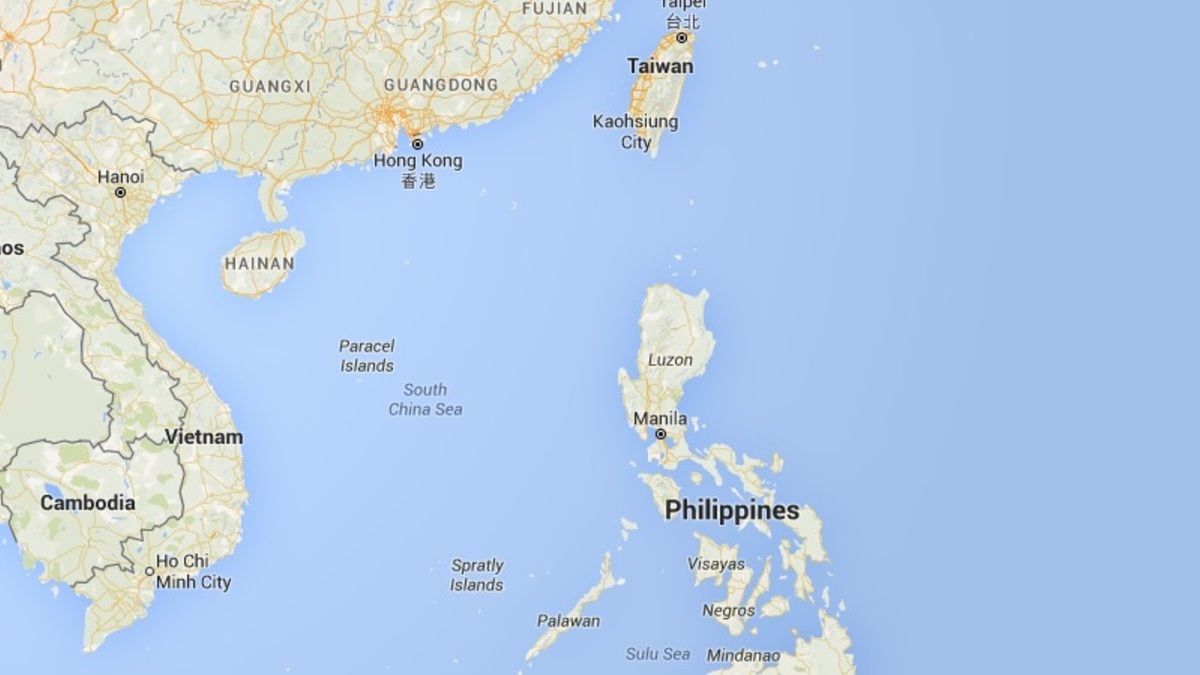
The case was initiated by the Philippines in 2013 under the dispute-settlement provisions of UNCLOS. Manila challenged the legal basis of China's maritime claims and activities in the South China Sea, particularly its assertion of historic rights within the so-called "nine-dash line".
China declined to participate in the proceedings, arguing that the tribunal lacked jurisdiction over the dispute.
In its ruling on 12 July 2016, the tribunal found that China's claims to historic rights within the nine-dash line had no legal basis under UNCLOS to the extent that they exceeded the maritime entitlements provided by the convention.
The tribunal also concluded that none of the maritime features in the Spratly Islands generated an exclusive economic zone and found that several Chinese activities had interfered with the Philippines' sovereign rights within its exclusive economic zone.
The statement issued by the 14 countries described the ruling as "a significant milestone" and said it was "final, legally binding, and definitive" between China and the Philippines regarding the maritime entitlements and claims addressed by the tribunal.
The 14 countries also reaffirmed their opposition to unilateral actions, coercion and the use of force that could threaten peace and stability in the region. They urged parties involved in the disputes to comply with the ruling and resolve disagreements peacefully through dialogue and other lawful mechanisms under international law. Source: Kyodo News.
Japan and China exchange criticism
Japanese Foreign Minister Toshimitsu Motegi said separately on Sunday that China's refusal to accept the ruling ran counter to the principle of peaceful settlement of disputes and undermined the rule of law in the international community.
China's Foreign Ministry responded by expressing strong opposition to the remarks, arguing that Japan was not a claimant in the South China Sea disputes and therefore had no standing to comment on China's sovereignty claims.
The ministry also referred to Japan's occupation of islands and reefs in the South China Sea during World War II, accusing Tokyo of attempting to interfere in regional affairs and warning against what it described as a "neo-militarism" agenda.
The exchange comes amid broader tensions between China and Japan, including disagreements over Taiwan and concerns expressed by Beijing regarding Japan's defence policies. Source: Kyodo News.
Hong Kong forum challenges arbitration award
Separately, a group of Chinese officials and international legal scholars gathered in Hong Kong on Monday to launch a report titled A New Critique of the South China Sea Arbitration Award.
According to CGTN, the report challenges the legitimacy of the 2016 tribunal ruling and argues that the arbitration panel should not have exercised jurisdiction over the case.
Participants at the roundtable discussion examined the legal basis of the tribunal's decision, regional security concerns and possible approaches to maintaining stability in the South China Sea.
Wu Shicun, chairman of the Huayang Center for Maritime Cooperation and Ocean Governance, told CGTN that the arbitration award had evolved from what critics once described as a "piece of waste paper" into a tool used by the Philippines and other countries in disputes involving the South China Sea.
He argued that some governments were applying double standards by demanding that China comply with the ruling while not imposing similar expectations on themselves.
Wu added that recent statements by the United States, Britain, the Philippines, Japan, Australia, New Zealand, Canada, Germany, Italy, Estonia, Latvia, Lithuania, Romania and Slovenia reaffirming the award's binding nature highlighted continuing geopolitical tensions surrounding the issue.
Phillip Saunders, professor emeritus at the Schulich School of Law at Dalhousie University in Canada, said the tribunal should have declined jurisdiction because China had previously invoked provisions under UNCLOS allowing certain categories of disputes to be excluded from compulsory arbitration.
Ruhanas Harun of Malaysia's National Defence University said the Philippines and China should pursue direct discussions to address their differences, while former Sri Lankan ambassador to Indonesia Jayanath Colombage said it remained important to examine the circumstances surrounding the 2016 ruling and its implications for regional stability.
Participants at the event said dialogue and bilateral negotiations remained the most practical means of addressing disputes in the South China Sea and argued that arbitration alone had not resolved the underlying disagreements. Source: CGTN.
Ongoing tensions in disputed waters
The South China Sea remains one of Asia's most contested maritime regions, with overlapping territorial claims involving China, the Philippines, Vietnam, Malaysia, Brunei and Taiwan.
In recent years, Chinese and Philippine vessels have been involved in a series of confrontations near disputed reefs and shoals, drawing international attention and prompting repeated calls for restraint.
The latest exchange between China and Japan highlights continuing divisions over the interpretation and significance of the 2016 arbitration ruling a decade after it was issued.