

Lawrence Wong’s National Day Rally: A 'renewed social compact' or just handouts to a disempowered citizenry?
Opinion: Singapore’s 4th Prime Minister, Lawrence Wong, in his first National Day Rally on 18 August 2024, outlined a "renewed social compact," but it felt more like handing out treats to a disempowered citizenry. With tighter controls and few real freedoms, Wong's approach mirrors the PAP's legacy, raising concerns ahead of the upcoming General Election.
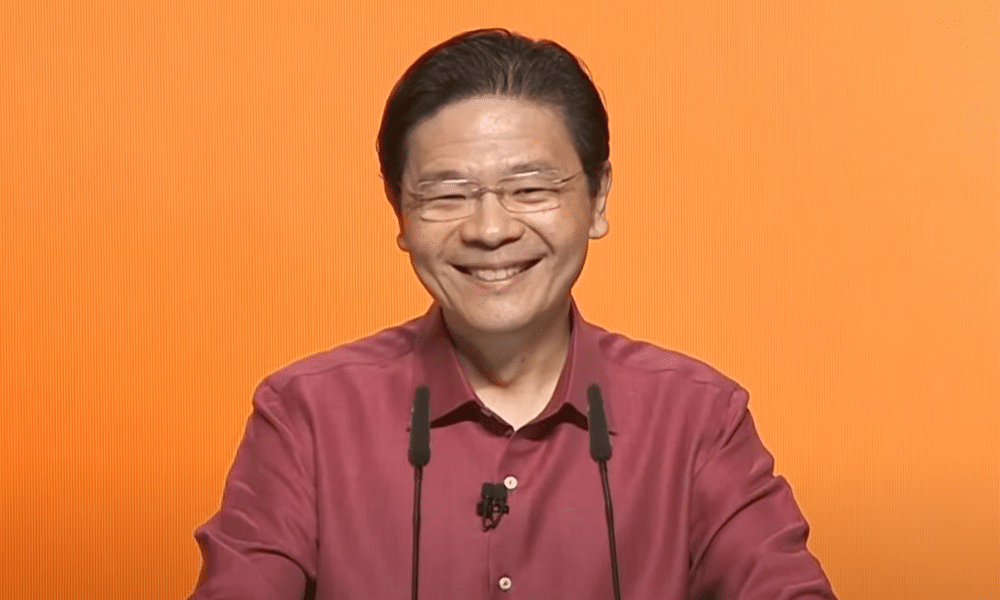

On 18 August 2024, Singapore’s 4th Prime Minister, Lawrence Wong, delivered his first National Day Rally speech, marking a significant moment in his leadership. While his speech was filled with grand visions and promises, it often felt like a collection of motherhood statements that, while well-intentioned, lacked the substantive depth needed to address Singapore’s pressing challenges.
The Unemployment Allowance: A Reluctant Concession
In his speech, Wong highlighted the SkillsFuture Jobseeker Support scheme as a support measure for unemployed workers.
However, it is important to note that this policy was introduced last year, representing a reluctant concession from a government that has historically resisted the concept of unemployment insurance. The PAP has long opposed such measures, despite persistent calls from the opposition.
For instance, former Minister for Manpower Josephine Teo had previously expressed serious concerns about unemployment insurance during a Parliament session in 2020.
Mrs Teo argued that such a plan could reduce workers’ motivation to find new employment and decrease employers’ willingness to offer retrenchment benefits. The Workers’ Party had been advocating for unemployment insurance since 2016, with MP Sylvia Lim suggesting a fund financed by small contributions from both workers and employers to better protect workers.
However, Mrs Teo contended that Singapore’s existing approach, focusing on employment support through programmes like SkillsFuture and Adapt and Grow, was more sustainable and effective. "Our current approach of focusing on employment support has shown encouraging results and is more sustainable," Mrs Teo said at the time.
The introduction of the SkillsFuture Jobseeker Support scheme now appears less as a bold new initiative and more as a reluctant acknowledgement that more must be done to support workers in a rapidly changing economy. It is a necessary step, but one that the PAP was slow to embrace, raising questions about the party's responsiveness to the needs of the people.
Increased Maternity Leave: A Double-Edged Sword
Wong's announcement of additional maternity leave, including ten weeks of shared parental leave, is a welcome change for many families.
This policy is undoubtedly a positive step towards supporting working parents and promoting gender equality in caregiving responsibilities.
However, it is difficult to ignore the broader context of Singapore's declining birth rate. The increase in maternity leave may appear as a desperate attempt to reverse this trend, which has long been a concern for the government.
While beneficial, this move might not be sufficient to address the deeper socio-economic factors contributing to the reluctance of many Singaporeans to have larger families.
The Removal of the Gifted Education Programme (GEP)
One of the more concrete announcements was the decision to discontinue the Gifted Education Programme (GEP) in its current form in primary schools.
This move signals a significant shift in Singapore's education policy, aiming to create a more inclusive system that stretches all students, regardless of their abilities.
While the GEP has long been seen as a symbol of academic excellence, its removal could help alleviate the pressure on young students and reduce the divisiveness it has sometimes created. Wong's plan to equip all primary schools to identify and nurture high-ability students is a step towards levelling the playing field, ensuring that talent is recognized and developed across the board.
BTO Priority for Singles: A Narrow Approach
Wong's announcement that singles will receive priority for Build-To-Order (BTO) flats if they choose to live near their parents addresses only a narrow segment of the population.
This policy may be beneficial for some, but it fails to consider the many singles — below the age of 35 — who do not wish to live near their parents due to strained relationships or a desire for independence.
The policy assumes that proximity to parents is universally desirable, overlooking the diverse needs and preferences of Singaporeans. The lack of flexibility in this approach could alienate a significant portion of the population that seeks autonomy and personal space.
Questionable Use of Taxpayer Money: The Sports Hub and Beyond
Wong also discussed the relocation of the Singapore Sports School to Kallang, yet provided no clear information on the costs involved or the future of the existing S$76 million sports complex in Woodlands. This raises serious concerns about the prudent use of taxpayer money.
The Sports Hub is a case in point—a project marked by the controversial tearing down of the iconic Kallang Stadium to build a new facility that, at this point, resembles more an indoor stadium and has hosted only one National Day Parade. The public-private partnership model that was supposed to drive the Sports Hub’s success has been widely criticized as a colossal waste of money. Is this truly what prudent spending of taxpayers' money looks like?
Rather than pouring funds into large-scale infrastructure projects, Singapore’s sportsmen and women need consistent sponsorship and financial support.
It is troubling that many athletes still rely on sponsorship from small businesses, like ramen shops or fried chicken restaurants, to fund their training and competition costs.
The focus should be on nurturing talent and providing the necessary resources for athletes to succeed, not on building grandiose structures that may not deliver the intended results.
The Future of Singapore: A Question of Identity
Wong concluded his speech with a grand statement: "We want this Singapore to be around for a very long time—for the next thousand years and beyond."
However, this statement rings hollow when considering the current demographic trends. With the decline in birth rates and the ageing of Singapore’s pioneer and Merdeka generation, the future of Singapore will likely be shaped by immigrants.
The descendants of those born after Singapore's independence may become an extreme minority within the next fifty years, leading to a significant dilution of the Singaporean identity. The government's construction plans, alongside the speculation of a planned 10 million population, make this scenario seem not just possible but probable.
A Vision with Little Room for Freedom
One of the most glaring omissions in Wong's speech was any meaningful discussion about greater freedom, liberty, or a shift in the government's approach to governance. Instead, his focus remained on facilitating the lives of citizens—or, more accurately, managing them as cogwheels in Singapore's economic machinery.
Wong’s call for a "renewed social compact" with Singaporeans, while sounding noble, raises significant questions about what this compact truly entails. As Wong himself put it, the new social compact is about ensuring that "every Singaporean feels there is hope; where all citizens, even the most disadvantaged amongst us, know that they can get a fair shot in life, that they can get ahead if they make the effort and work hard."
Yet, this framing reveals a vision where citizens are primarily seen as workers, expected to stay motivated and productive without questioning the broader direction of the nation. This compact does not seem to embrace the idea of citizens as active participants in shaping the country’s future, but rather as individuals who must keep working within the established system.
Wong's idea of hope appears to be limited to economic advancement, not democratic participation or the appreciation of one's voice and vote.
This is particularly concerning given the PAP's history of pushing through unpopular policies with their supermajority, such as the amendments to the presidential election process, the enactment of laws like the Protection from Online Falsehoods and Manipulation Act (POFMA), and, more recently, the sale of Income Insurance to German insurer Allianz. These actions highlight a pattern where the government acts unilaterally, often disregarding public opinion.
Under Wong’s predecessor, Lee Hsien Loong, whom Wong served alongside for the past decade, civil rights have been further suppressed, surpassing even the stringent controls seen during late Lee Kuan Yew's era—a significant and concerning development. Wong’s approach, despite his rhetoric of renewal, does not appear to deviate from this path. What he seems to want is for oppressed Singaporeans to focus on their working lives and not be active citizens who challenge or influence the country’s direction.
Wong’s speech also touched on the pressures of life in Singapore, acknowledging that people "do not want to be trapped in an endless rat race, or be caught in a constant cycle of comparisons based on narrow definitions of success."
Yet, by recognizing this, Wong inadvertently highlights the very nature of the system he oversees—a system where citizens are indeed trapped in a rat race, where their choices are limited to either continuing to run or stopping in their tracks. There is no suggestion of empowering citizens to leave the track entirely, which would require a shift towards greater democratic engagement and personal freedoms.
Instead, Wong’s vision seems to be one where citizens remain in their lanes, focused on their work, while the broader decisions about the nation’s future remain firmly in the hands of the PAP.
Aspirations vs. Reality
Wong's first National Day Rally speech reflects a leader attempting to navigate the complexities of governing a modern, diverse Singapore.
While his speech was filled with lofty aspirations, the lack of specific policy details, coupled with the government's continued emphasis on control and economic efficiency over individual freedoms, leaves much to be desired.
The positive developments, such as the removal of the GEP and the introduction of additional maternity leave and unemployment support, are overshadowed by the broader concerns about the direction of Wong’s administration and its ability to truly address the needs and aspirations of the people.
As Singaporeans look to the future and the upcoming General Election, which must be held by November 2025, they will be watching closely to see if Wong’s leadership will continue to mirror the approach of Lee Hsien Loong’s administration—offering tidbits and handouts in the form of subsidies and grants while prioritizing the state’s economic ambitions over the freedoms and rights of its citizens.


