South Africa submits ICJ dossier alleging Israeli non-compliance in Gaza
South Africa has submitted evidence to the ICJ alleging Israel failed to comply with legally binding provisional measures in the Gaza genocide case, prompting Amnesty International to urge states to pressure Israel to implement the court’s orders.
- South Africa submitted a dossier to the ICJ on 25 August alleging Israel breached provisional measures.
- Amnesty says restrictions on aid and access undermine compliance with the court’s orders.
- The ICJ has yet to issue a final ruling on whether genocide occurred in Gaza.

South Africa has submitted evidence to the International Court of Justice (ICJ) alleging that Israel has failed to comply with the court’s legally binding provisional measures in the genocide case concerning Palestinians in the Gaza Strip, prompting Amnesty International to call on other states to pressure Israel to comply.
The submission, filed on 25 August, contains what South Africa describes as a substantial dossier of information on Israel’s compliance with the provisional measures. The South African government said the dossier was submitted to assist the committee of judges responsible for monitoring implementation of the measures and recommending possible options to the court.
Amnesty International said South Africa’s submission should spur other states to take action to ensure that the court’s orders are implemented.
“Since the ICJ issued its first set of provisional measures in January 2024, Israeli authorities have continued to inflict irreparable damage to the rights of Palestinians in Gaza protected under the Genocide Convention,” said Heba Morayef, Amnesty International’s regional director for the Middle East and North Africa.
South Africa’s submission
South Africa argues in its submission that Israel has failed to comply with the measures ordered by the ICJ. Amnesty said the allegations are consistent with its own findings that Israeli authorities have failed to implement the court’s measures.
The ICJ issued its first set of provisional measures in January 2024 after South Africa instituted proceedings against Israel under the Convention on the Prevention and Punishment of the Crime of Genocide.
In its January order, the court directed Israel to take all measures within its power to prevent acts falling within Article II of the Genocide Convention, including killing members of the protected group, causing serious bodily or mental harm, and deliberately inflicting conditions of life calculated to bring about its physical destruction in whole or in part. The court also ordered Israel to ensure that its military did not commit such acts.
The court further ordered Israel to prevent and punish direct and public incitement to genocide and to take immediate and effective measures to enable the provision of urgently needed basic services and humanitarian assistance to Palestinians in Gaza.
Humanitarian supplies and access
Amnesty said Israel continues to impose severe restrictions affecting the entry and distribution of essential supplies into Gaza, including medical supplies and equipment, food, fuel and materials required for reconstruction and repairs.
The organisation said these restrictions violate the ICJ’s order requiring Israel to facilitate urgently needed basic services and humanitarian assistance, a requirement that was reiterated in subsequent orders issued in March and May 2024.
In March, the ICJ indicated additional provisional measures and ordered that its January measures be implemented.
In its 24 May order, the court reaffirmed the earlier measures and issued additional orders in response to worsening conditions in Rafah. It directed Israel, among other things, to halt its military offensive and other actions in Rafah that could inflict conditions of life on Palestinians in Gaza capable of bringing about their physical destruction in whole or in part.
Evidence and humanitarian access
Amnesty also accused Israel of restricting access to Gaza for international media organisations, human rights investigators and UN-mandated bodies.
Morayef said the killing of Palestinian media workers and restrictions on international access had limited the ability to document developments in Gaza. She also criticised Israel over access for the International Committee of the Red Cross to Palestinian detainees.
Amnesty said these actions were inconsistent with the ICJ’s order requiring the preservation of evidence relating to allegations of genocidal acts.
The organisation also accused Israeli authorities of failing to investigate or prosecute senior politicians who have made statements it considers genocidal, arguing that this breached the court’s order concerning public and direct incitement to genocide.
Conditions in Gaza
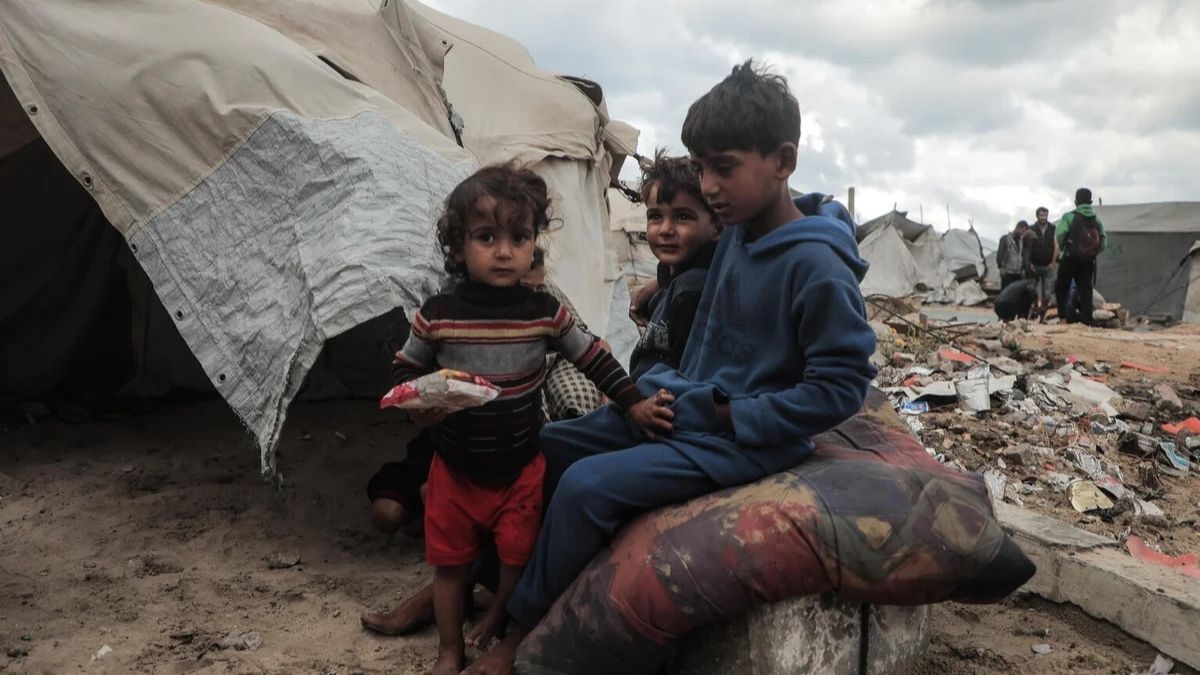
Amnesty said that although the humanitarian situation had improved in some respects and the scale and intensity of attacks had decreased following the ceasefire announced in October 2025, Israeli air strikes, destruction of civilian objects, forced displacement and killings had continued.
According to figures cited by Amnesty, at least 1,303 Palestinians, including more than 300 children, have been killed by Israeli attacks since the October 2025 ceasefire.
The organisation also said tens of thousands of Palestinians were living with serious physical injuries and psychological harm requiring long-term treatment and rehabilitation, while restrictions on reconstruction were preventing displaced Palestinians from returning to their homes.
Amnesty said nearly the entire population of Gaza had been displaced, in many cases repeatedly, and that Israeli military positions and local militias were present across nearly 65% of the territory, according to its assessment.
South Africa v Israel case
South Africa filed its case against Israel at the ICJ on 29 December 2023, alleging violations of the Genocide Convention in relation to Israel’s military operations in Gaza. The court has not yet issued a final ruling on whether genocide has occurred.
The provisional measures are interim orders intended to protect rights under the Genocide Convention while the underlying case proceeds. In January 2024, the ICJ found that at least some of the rights claimed by South Africa under the Convention were plausible and that there was a real and imminent risk of irreparable prejudice to those rights, leading it to issue binding provisional measures.
The court subsequently issued additional measures in March and May 2024. Its case record continues to list the proceedings as ongoing.
Amnesty is calling on states to pressure Israel to implement the provisional measures, halt arms transfers and military assistance, and end trade and economic relations that contribute to what it describes as violations of international law.
The organisation also called on South Africa to suspend trade agreements with Israel that could contribute to human rights violations, including seaborne thermal coal shipments.
South Africa’s latest dossier now places Israel’s compliance with the ICJ’s provisional measures before the court as the proceedings in the genocide case continue.