NSW drops appeal after court rejects IHRA definition in terrorism order case
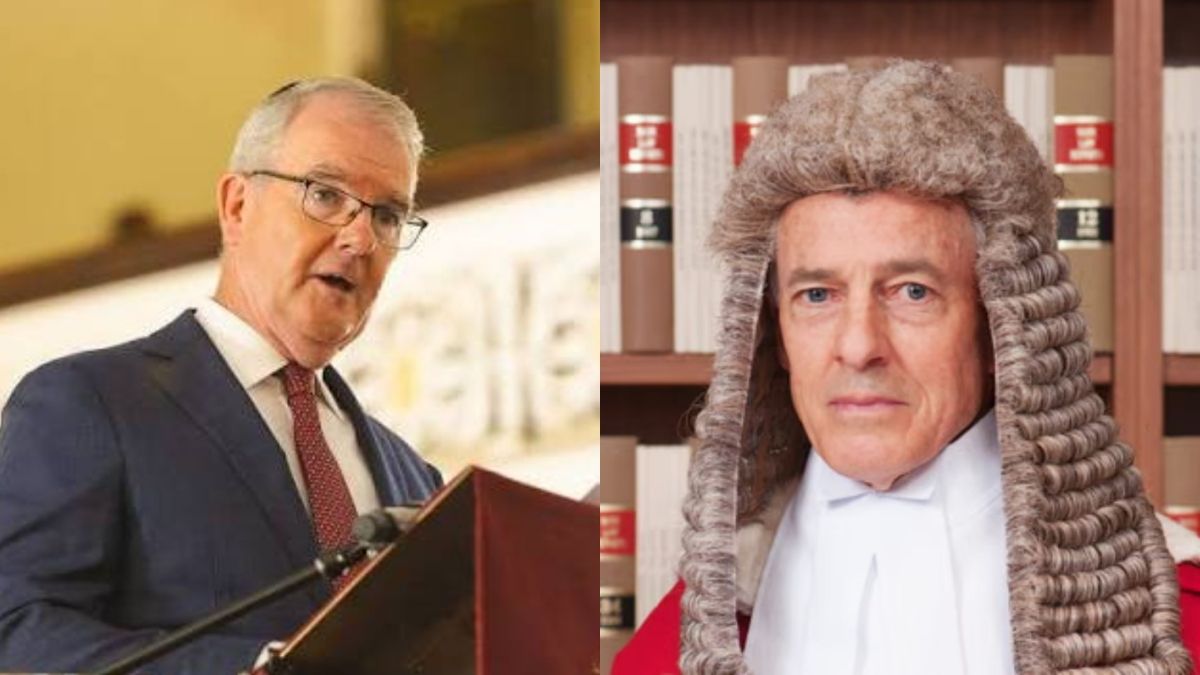
New South Wales Attorney General Michael Daley told a Budget Estimates hearing on 31 August 2026 that the state will not appeal a Supreme Court judgment rejecting the IHRA definition of antisemitism, after advice that an appeal had no reasonable prospects of success.
- NSW abandons appeal against ruling that rejected IHRA antisemitism definition in court proceedings
- Court found graffiti was paid vandalism directed by organised crime, not ideological offending
- Justice Fagan said IHRA wording was too imprecise for ordinary Australian public understanding

New South Wales will not appeal a Supreme Court judgment that rejected the International Holocaust Remembrance Alliance (IHRA) definition of antisemitism, the state's Attorney General confirmed on 31 August 2026.
Appearing before a Budget Estimates hearing, Attorney General Michael Daley said he had sought urgent advice on the prospects of an appeal following the court's refusal of an extended supervision order application.
"No we won't be appealing that decision," Daley told the hearing. He said advice from the Crown Solicitor, senior counsel and junior counsel had led him to conclude that an appeal would have no reasonable prospects and would fail.
The decision leaves standing the judgment of Justice Desmond Fagan in State of New South Wales v Farhat [2026] NSWSC 985, delivered after a five-day hearing in late July 2026.
The application and its dismissal
The state had sought an extended supervision order (ESO) under the Terrorism (High Risk Offenders) Act 2017 against Mohommed Farhat, aged 22, proposing 55 conditions that the court described as highly restrictive of his liberty.
Farhat was serving a sentence of one year and eight months for offences committed on 20 and 21 November 2024, when he spray-painted slogans on nine parked vehicles and four buildings in Woollahra and destroyed one car by fire.
The slogans included "Fuk Israel" and references to the acronym "PKK". Total property damage was assessed at A$110,409.72, of which the destroyed vehicle accounted for A$86,768.31.
Justice Fagan dismissed the application on 30 July 2026 and ordered the state to pay Farhat's costs, with reasons reserved and later published.
To succeed, the state had to satisfy the court to a high degree of probability that Farhat posed an unacceptable risk of committing a serious terrorism offence. The court found no significant risk existed.
Findings on motivation
The judgment found that Farhat had been recruited and directed by another person, who paid him A$4,000 and an unspecified quantity of drugs to paint slogans that the recruiter stipulated.
The court found he did not understand the meaning of "PKK", that none of the slogans reflected any ideology he held, and that he did not intend to express hatred of Jews.
Evidence before the court included Farhat's account to Counter Terrorism Command officers on 12 December 2024, in which he described being contacted through the encrypted application Signal by an overseas number.
Justice Fagan noted that the offending fitted the pattern identified by Strike Force Pearl. On 10 March 2025, NSW Police Deputy Commissioner David Hudson said the incidents investigated by that operation were orchestrated by an organised crime element, and that none of those arrested had displayed any form of antisemitic ideology.
Psychological evidence placed Farhat's full-scale intelligence quotient in what one court-appointed expert described as the mild intellectually handicapped range, with severely impaired executive function and a long-standing, belatedly diagnosed attention deficit hyperactivity disorder.
Rejection of the IHRA formulation
The state tendered the IHRA formulation through an expert report by Dr Shanahan, an analyst of Middle Eastern affairs. The court held that this did not advance the state's case.
Justice Fagan wrote that the IHRA core text was so verbose and imprecise that it could not realistically be attributed to the ordinary, reasonably informed member of the Australian public.
He said the formulation did not reflect established usage of the term "antisemitic" in Australia, and appeared to repurpose the word as an amalgamated concept of hatred toward Jews and criticism of Israel.
The judgment recorded that the judge was not the first to criticise the drafting, citing Sir Stephen Sedley's assessment that it fails the first test of any definition by being indefinite.
Justice Fagan held that a statement of hostility to Israel, reasoned or unreasoned, does not express prejudice against Jews as Jews, and that the diversity of views among Jewish representative bodies in Australia demonstrated the fallacy of treating the graffiti as antisemitic.
The judgment cited the submission of the Jewish Council of Australia (JCA) to the Royal Commission into Antisemitism and Social Cohesion, lodged on 16 June 2026, which warned against approaches conflating antisemitism with criticism of Israel.
Criticism of the process
Justice Fagan found that from the start of the investigation through to the final hearing, police officers and legal representatives of state agencies had repeatedly characterised the graffiti as antisemitic.
That label, he held, was wrongly applied, injustice to Farhat had followed, and the misconception had led the state to bring the proceedings.
The judgment also examined the revocation of Farhat's statutory parole order. On 2 December 2025, the Commissioner of Corrective Services applied to the State Parole Authority to revoke the order, and the Authority acceded ex parte on 4 December 2025.
Justice Fagan inferred that the Commissioner had not consulted Counter Terrorism Command investigators or Strike Force Pearl, and described this as a serious failure of communication between agencies.
Political reaction
Greens MP and justice spokesperson Sue Higginson, a solicitor, said the IHRA definition had no place in prosecutions and the justice system of New South Wales.
"Justice Fagan has rightly decried the IHRA definition as incomprehensible to the ordinary and reasonable member of the Australian public," she said, adding that it had been bewildering to see the government signal an appeal.
Higginson said the definition remained in force across the NSW government, the public service and many private institutions despite the judgment. She said Jillian Segal was attempting to expand its application, and that the ruling should pour cold water over that proposition.
She said she remained concerned at the circumstances that gave rise to the decision, describing it as an attempt to pursue a troubled young man through the courts and keep him in custody despite a statutory parole order requiring mental health and substance support.
Higginson said she understood the Law Enforcement Conduct Commission (LECC) was overseeing a police investigation into the circumstances of the prosecution and awaited its outcome with interest.