Jeju officer admits closing missing-person cases to avoid workload as probe finds 25 more irregularities
A Jeju police officer admitted to prematurely closing missing-person cases to avoid additional workload, as a review uncovered 25 more suspected irregularities among 298 cases he handled.
- A Jeju officer admitted closing missing-person cases prematurely to avoid extra workload.
- Police found 25 suspected irregularities among 298 cases handled by the officer.
- The officer was sent to prosecutors as police face scrutiny over failures in handling missing-person reports.

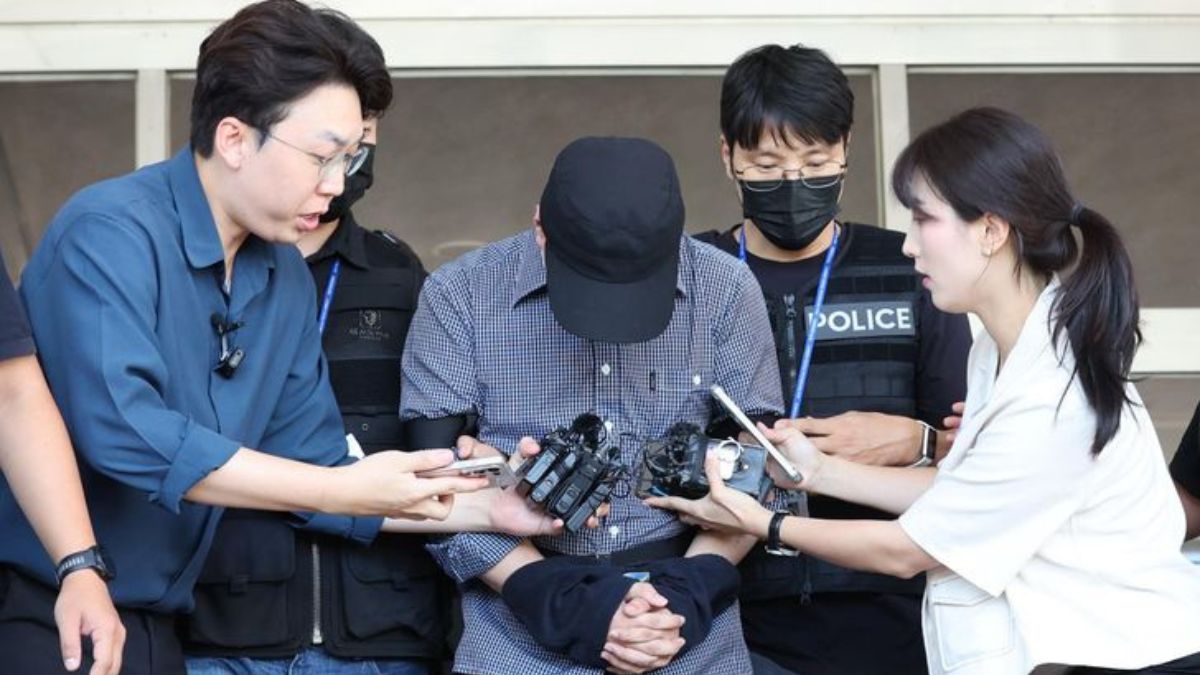
SOUTH KOREA: A South Korean police officer accused of mishandling missing-person cases on Jeju Island admitted that he prematurely closed cases to avoid the additional workload of keeping them open, police said on Tuesday (1 September).
The officer, identified by his surname Bu, came under scrutiny after he was accused of falsely closing the case of 37-year-old Jang Mi-ran, who disappeared in May and was later found dead on the island.
The Jeju Provincial Police said Bu told investigators that he did not take Jang's disappearance seriously because she was an adult and felt burdened by the work required to keep unresolved cases open.
Profilers who interviewed Bu believe fatigue stemming from an increasing workload and negligence were the main factors behind his actions, police said.
Bu worked on the missing-person team at Jeju Seobu Police Station from March 2025 until July 2026 and handled 298 cases during that period.
Police find 25 additional cases with irregularities
A police review of Bu's 298 cases has identified 25 additional cases suspected of having been prematurely closed.
Ten involved missing people whose whereabouts had not been confirmed when Bu closed the cases, following a pattern similar to the two cases that initially brought the scandal to light.
Police said all 10 people were subsequently confirmed to be safe.
In the other 15 cases, Bu removed case records by entering reasons such as “death in a traffic accident” or “unnatural death” into the police system, even though the missing people's whereabouts had already been confirmed.
Police said Bu used a similar method in Jang's case, entering “death in a traffic accident” into the system after closing her case.
The entry resulted in the case record being removed from the missing-persons profiling system.
Bu initially claimed that he had contacted the missing people before closing their cases, but later admitted that this was false after investigators began examining his actions.
He was detained last week on charges including dereliction of duty and forging public electronic records.
Jang's case exposed wider failures
Jang was reported missing in May after her boyfriend, who lived with her, woke up to find that she had disappeared.
Bu received the missing-person report while working a night shift on 15 May.
Police later found that he had recorded that he contacted Jang and confirmed that she was safe, while stating that she did not want her whereabouts disclosed to her family.
Investigators subsequently found no evidence that Bu had contacted her.
A body found at a palm farm on Jeju Island on 24 August was later confirmed to be Jang's.
Police initially said the position of her body suggested she may have died by hanging, but later said the cause of death could not be determined because of the advanced state of decomposition.
The case intensified scrutiny of Bu after investigators discovered that he had also prematurely closed the missing-person case of a man in his 60s in July.
The man was later found dead on 22 August, 51 days after he was reported missing.
In that case, Bu reportedly entered “whereabouts confirmed” into the system after another officer had spoken to the person who initially filed the report.
Police said Bu was concerned that deleting the case entirely would be noticed.
Supervisory failures under investigation
The scandal has also raised questions over how Bu was able to handle hundreds of missing-person cases with limited oversight.
Last week, police removed four officers in the chain of command at Jeju Seobu Police Station from their duties pending an internal investigation into how the cases were handled.
The National Police Agency has also ordered stronger procedures for missing-person investigations nationwide.
Under the new measures, criminal division chiefs are required to confirm the outcome of a missing-person case before it can be closed, rather than leaving the decision solely to individual officers.
Other regional police agencies, including those in Daejeon-Sejong-Chungnam and Gyeonggi Nambu, have launched their own reviews of missing-person cases closed over the past three years.
The Jeju case has also renewed debate over South Korea's handling of missing adults.
Under existing law, adults who disappear without falling into specific protected categories are generally handled under police regulations rather than the statutory framework that applies to children and certain vulnerable people.
Critics have argued that the system gives individual officers too much discretion in determining whether adult missing-person cases should remain active, while police and lawmakers have also raised concerns over privacy and the resources required to investigate cases involving adults who may have left voluntarily.