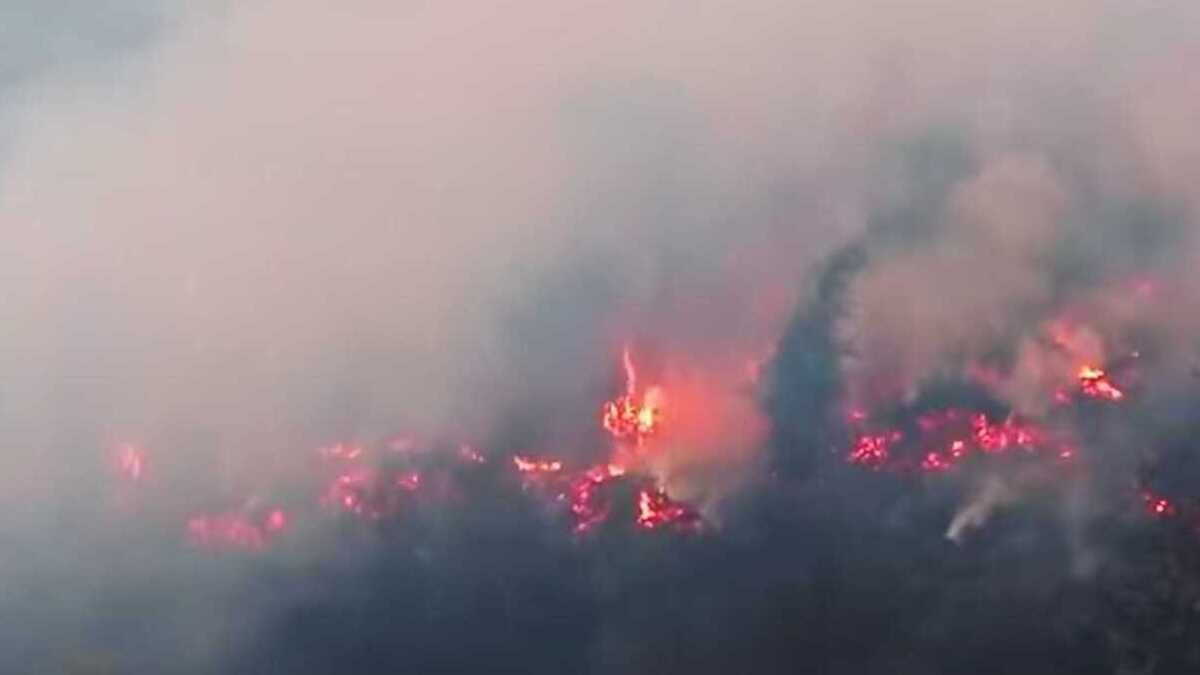
Indonesia braces for September fire battle as dry spell prolongs
Indonesia will intensify forest and land fire suppression throughout September, deploying cloud seeding, aerial water-bombing and about 1,000 additional personnel as authorities warn significant rainfall may not return until early October.
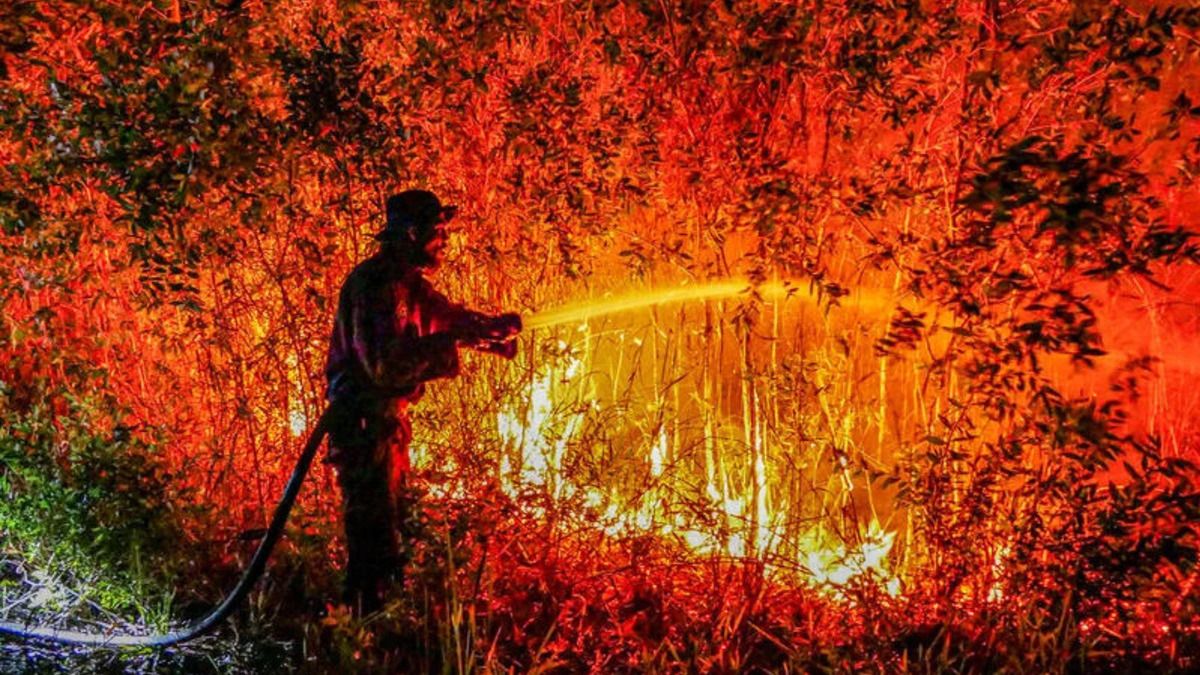
- Indonesia expects September to remain critical for suppressing widespread forest and land fires.
- Authorities will intensify cloud seeding, aerial water-bombing and ground firefighting operations.
- Smoke and haze from Kalimantan have already affected air quality in parts of Malaysia.

Indonesia will intensify its efforts to contain widespread forest and land fires throughout September, with the Forestry Ministry preparing to maximise weather modification operations, aerial water-bombing and ground firefighting teams as the country faces a prolonged dry spell.
Forestry Minister Raja Juli Antoni said on Monday that September would be a crucial period for fire suppression, citing forecasts from the Meteorology, Climatology and Geophysics Agency (BMKG) indicating that significant natural rainfall may not return until early October.
“September is our battleground,” Raja Juli said after a coordination meeting on forest and land fire management in Palembang, South Sumatra.
The ministry's strategy will centre on three measures: weather modification operations, commonly known as cloud seeding; aerial water-bombing; and the deployment of ground task forces in areas recording high numbers of hotspots.
Cloud seeding to be maximised while conditions allow
Raja Juli said weather modification would be maximised while suitable atmospheric conditions remained available. The operation involves inducing rainfall from existing cloud formations over areas affected by fires.
He described rainfall as one of the most effective ways of suppressing fires, particularly in peatland areas, where fires can continue burning beneath the surface.
The government has already been conducting weather modification operations in several provinces. On 26 August, Raja Juli said the authorities were prioritising areas that still had potential rain clouds, including Berau in East Kalimantan.
The government also prepared additional weather modification operations in Riau from 29 August to 1 September, alongside water-bombing and ground suppression measures.
Around 1,000 additional personnel to be deployed
The Forestry Ministry is also seeking to strengthen ground operations by adding about 1,000 personnel through a temporary deployment mechanism known as BKO.
Raja Juli said the additional personnel were needed both to support specialised firefighting teams and to prevent exhaustion among personnel already working on the frontline.
Ground task forces are expected to be concentrated in areas with high numbers of hotspots, with personnel rotated according to operational requirements. Those without specialised firefighting skills can assist with logistics and other supporting duties.
The intensified operation comes as Indonesia's fire season continues to affect large areas of Sumatra and Kalimantan.
According to the latest figures cited by the Forestry Ministry, nearly 286,000 hectares of land had been burned nationwide between January and late August 2026.
The National Disaster Management Agency (BNPB) separately reported more than 48,889 hectares burned across six priority provinces, while the ministry's SIPONGI monitoring system recorded more than 1,200 active hotspots at peak levels across Sumatra and Kalimantan.
Fires fuel haze across Kalimantan
The prolonged dry conditions have also produced significant smoke and haze, including across parts of Kalimantan.
On 29 August, satellite imagery analysed by the Asean Specialised Meteorological Centre (ASMC) detected 1,211 hotspots across the southern Asean region. Of these, 1,180 were in Kalimantan, 18 in Sumatra and 13 in Malaysia. Moderate to thick transboundary haze was detected over West Kalimantan and moving northwards into western Sarawak.
The haze has already affected neighbouring Malaysia. Sabah authorities reported unhealthy air quality in Kota Kinabalu and Tawau on 31 August, with Air Pollutant Index readings of 122 and 153 respectively.
In Sarawak, the state government said an emergency declaration could be considered in individual localities if the API reached 500. Deputy Premier Douglas Uggah Embas said the state was communicating its concerns through the federal government and Asean channels.
Malaysia's Environment Department has also reported unhealthy to hazardous air quality at several monitoring stations in Sarawak and other parts of the country.
Hiking routes closed in nine national parks
The Forestry Ministry has also temporarily closed hiking routes in nine national parks because of the heightened risk of forest and land fires. The measure is intended to protect hikers while allowing firefighting resources, including water-bombing helicopters, to be concentrated on areas affected by fires.
The closures cover Mount Semeru in Bromo Tengger Semeru National Park, Kerinci Seblat National Park, Mount Ciremai National Park, Tambora National Park, Manusela National Park, Bukit Baka Bukit Raya National Park, Mount Gede Pangrango National Park, Mount Leuser National Park, and parts of Lorentz National Park along the Ilaga, Tsinga, Sugapa and Ugimba routes.
Raja Juli said fires inside national parks had placed additional pressure on firefighting operations, with some helicopters originally assigned to priority fire zones having to be diverted to protected areas.
The minister said the restriction was a preventive measure rather than a permanent ban on outdoor tourism. It follows a recent wildfire at Bromo Tengger Semeru National Park that trapped about 170 hikers.
Limited hiking remains permitted under strict safety measures and in designated safe areas at Mount Rinjani National Park, Mount Merbabu National Park, the Hyang Highlands Wildlife Sanctuary around Mount Argopuro, and Mount Halimun Salak National Park.
September comes amid prolonged dry conditions
The Indonesian government has been increasing its firefighting efforts as the dry season continues and the expected arrival of natural rainfall remains uncertain.
The Forestry Ministry said the fires have been associated with prolonged dry conditions linked to El Niño, while illegal slash-and-burn practices for land clearing have also contributed to the spread of fires.
With September expected to remain a critical month, authorities are preparing to maintain aerial and ground operations until rainfall provides greater assistance in suppressing fires.
For the latest operational information, the Indonesian Forestry Ministry and ANTARA News report on the September firefighting strategy provide the primary local sources