Police rescue two students held in fake kidnapping scam near Bangkok
Police in Pathum Thani, a province just north of Bangkok, rescued two Rangsit University students coerced by a call-centre gang into staging their own kidnapping to extort nearly 900,000 baht (about US$27,000) from their families.
- Two students were tricked into isolation and staged kidnappings to extort family money.
- The pair lost nearly 900,000 baht (about US$27,000) to mule accounts before rescue.
- A second case involving two female students surfaced the same day.

Police rescued two university students on Wednesday, 15 July 2026, after a call-centre gang coerced them into isolating themselves in rented rooms and staging a fake kidnapping to extort money from their families.
The rescue took place in Pathum Thani, a province on the northern edge of the Thai capital, Bangkok. The two victims, students at Rangsit University, lost nearly 900,000 baht, according to Pol Col Patthanachai Pamornpiboon, chief of the Pak Khlong Rangsit police station.
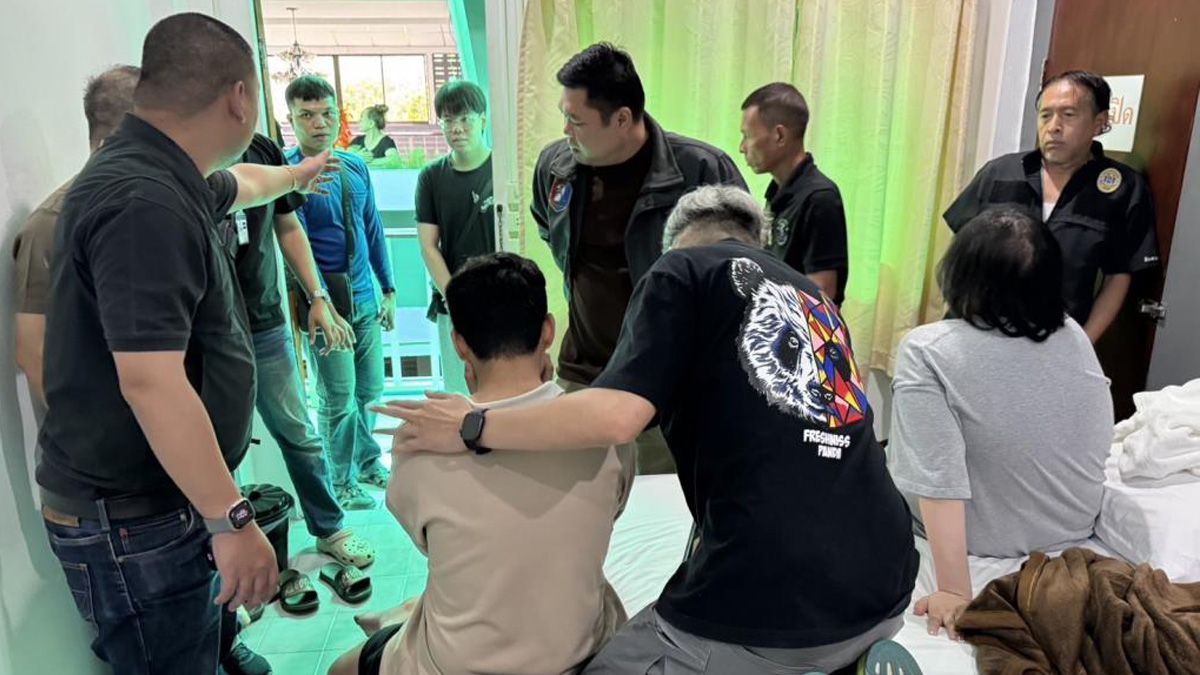
Officers forced open a rented room around midday. Investigators identified the pair, one studying aviation and the other computer studies, who had been directed to the same location and met there.
When officers identified themselves, the students initially refused to believe they were real police. They had been ordered to cut off outside contact and taught to distrust the authorities.
Only after officers confirmed their identities did the pair put down their phones. Both then embraced the officers in relief, having been manipulated into believing any callers might be impostors intent on harming them.
The deception began when the gang telephoned the students, first posing as mobile-network staff and accusing them of involvement in a criminal case, according to police. The callers then claimed the students had won overseas study scholarships.
To appear credible, the gang sent forged documents bearing Thailand's national emblem and the signatures of university executives. Rangsit University later confirmed the documents and signatures were entirely fake.
The students were told they had to maintain a certain account balance for visa applications. They were instructed to ask their parents to transfer money, move out of their dormitories to designated rooms, and tell no one the truth.
Inside the rooms, police found evidence of tight control. One victim had been ordered to keep a video call open at all times so the gang could monitor him and stop him contacting others.
The other had been told to bind his ankles with a towel and photograph himself, so his parents would believe he had been kidnapped and transfer more money under pressure.
Investigators said each student lost about 450,000 baht to mule accounts. One arranged for family money to be transferred, while the other pawned a gold necklace and ring before sending the proceeds to the gang.
The alert came from a senior student who could not reach one victim, said Pol Lt Col Sirapop Bualuang, deputy investigation chief at Pak Khlong Rangsit. Officers coordinated with the university and traced the students within 24 hours.
Phone signals showed the gang had used a VPN routed overseas, part of a plan that involved persuading the victims to install an application. Officers then reviewed CCTV footage to track the first victim's movements from his dormitory.
He was found to have moved between a daily-rate resort and a nearby dormitory, where his motorcycle was parked. Using a spare key, officers entered and found not one but two victims sharing the room.
Prathuan, a parent who travelled from the northern province of Phetchabun, said his son had called excitedly to say he had won a scholarship to the United States and needed funds for a visa. He transferred 350,000 baht.
He grew suspicious only when a screenshot of the account balance appeared to have been altered. Unable to reach his son, he set off for Pathum Thani, and en route police informed him that his son had been rescued.
Jomdet Trimek, deputy rector of Rangsit University, said several students had been targeted in the same way, with many becoming stressed and skipping classes. Families of affected students were often relatively well off, he added.
The university has issued repeated warnings and urged parents and students to verify any scholarship offer or transfer request directly with the institution before acting.
Later the same day, Rangsit University reported that two first-year female students had disappeared in a similar manner. Working with a neighbouring police station, officers traced and safely rescued both.
Those students had been contacted by people posing as police in the northeastern province of Khon Kaen, threatened with serious criminal charges, forced into separate isolation, and deceived into transferring almost 600,000 baht to mule accounts.
Pol Col Patthanachai urged the public to stay alert, stressing that genuine officers do not demand constant video calls, transfer calls between agencies, or forbid contact with family. He warned that the gangs pressure victims into writing scripts by hand to deceive their parents.
Such scams have become a regional concern across Southeast Asia, where organised gangs often operate from across national borders. Authorities are tracing the financial transactions and gathering evidence to prosecute those involved.
Officers summarised their advice in a simple refrain: do not believe, do not transfer.