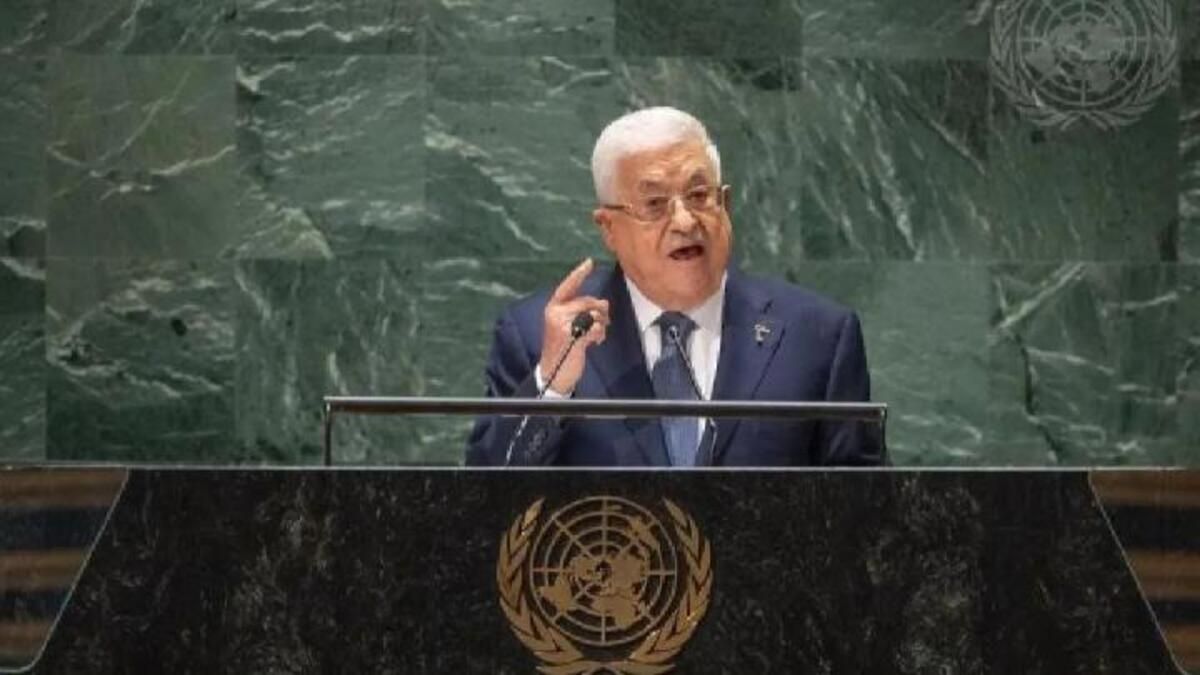
UN General Assembly decisively backs Palestinian statehood bid amid ongoing Gaza conflict
The UN General Assembly overwhelmingly supported the Palestinian bid for U.N. membership amid the Gaza conflict, urging the Security Council to reconsider their application favorably.


The United Nations General Assembly decisively supported the Palestinian bid for full U.N. membership on Friday, a significant move amidst the ongoing seven-month war between Israel and Hamas in the Gaza Strip, and amid Israel's expanding settlements in the occupied West Bank, which the U.N. deems illegal.
The General Assembly's resolution, which passed with 143 votes in favour, does not grant full membership but recognizes Palestine as qualified to join and urges the U.N. Security Council to reconsider its application favourably. This comes after the U.S. vetoed a similar effort in the Security Council last month.
Nine countries opposed the resolution, including the U.S., Israel, Argentina, Czechia, Hungary, Micronesia, Palau, Papua New Guinea, and Nauru. These countries, except Argentina, are either smaller nations or have specific political alliances with the U.S., reflecting geopolitical alignments over this issue.
Palestinian Ambassador Riyad Mansour, in his address, painted a grim picture of the situation in Palestine: "I stand before you as more than 35,000 Palestinians have been killed, 80,000 have been maimed, two million have been displaced, and everything has been destroyed," he said.
Mansour's speech underscored the desperate circumstances facing the Palestinian people, emphasizing the urgency and moral imperative of the U.N.'s recognition.
"Israel’s plan has not changed: destroy and displace. The world is barely beginning to grasp the cruel and extensive nature of the actions against the Palestinian people," Mansour added.
Highlighting the political stakes, Mansour also accused the Israeli Prime Minister of perpetuating violence for political survival: "I stand before you as the Israeli prime minister is ready to kill thousands more to ensure his political survival," he claimed.
He stressed that a vote for Palestinian statehood was a vote for justice and peace, appealing to the international community's commitment to human rights and self-determination: "A yes vote is a vote for Palestinian existence, it is not against any state, but it is against the attempts to deprive us of our state."
His remarks, asserting the Palestinian commitment to peace and self-determination, received significant applause.
In stark contrast, Israel's Ambassador Gilad Erdan offered a starkly different perspective, positioning the vote as a step toward legitimizing terrorism. "The United Nations was founded with the mission of ensuring such tyranny never raises its ugly head again. Today, you are about to do the exact opposite and advance the establishment of a Palestinian terror state, which will be led by the Hitler of our times," Erdan stated emphatically.
He argued that granting rights to the Palestinian Authority equated to endorsing Hamas, a group he claimed would dominate a future Palestinian state: "In every poll, Hamas is predicted to win Palestinian elections, if they ever happen. So today, the General Assembly is not only about to grant the rights to a state of the Palestinian Authority, today, you are about to grant privileges and rights to the future terror state of Hamas."
“As long as so many of you are ‘Jew-hating,’ you don’t really care that the Palestinians are not ‘peace-loving,’” Erdan declared, predicting that the U.S. might cut funding to the U.N. if the bid progresses further.
In a theatrical move, Erdan used a miniature shredder to shred a piece of paper titled "Charter -- United Nations," illustrating to the members the destructive implications of their vote supporting Palestinian statehood.
The resolution, while not enabling voting rights, will grant the Palestinians some privileges from September 2024, such as a designated seat in the assembly hall. Currently recognized as a non-member observer state—a status granted in 2012—this move represents a significant shift in their international standing.
Ambassador Mohamed Abushahab from the United Arab Emirates also spoke before the vote, urging the Security Council to align with what he described as the will of the international community.
The adoption of this resolution, according to the Palestinian U.N. mission, is viewed as crucial in preserving the sought-after two-state solution and reaffirming the right of the Palestinian people to self-determination. The mission is run by the Palestinian Authority, which exercises limited self-rule in the West Bank.
The Palestinian Authority, which governs parts of the West Bank, contrasts sharply with Hamas's control of Gaza since 2007.
The militant group Hamas initiated the current conflict on October 7 last year, which in turn provoked a severe response from Israel, resulting in—at least according to Gaza authorities—34,943 people killed and 78,572 wounded in Israeli attacks on Gaza.