France riots leave thousands arrested as Macron faces mounting budget pressure
France has been rocked by violent protests over living costs, public services and school conditions, with nearly 2,400 arrests reported and historic buildings damaged. The unrest has intensified pressure on President Emmanuel Macron ahead of a crucial budget vote.
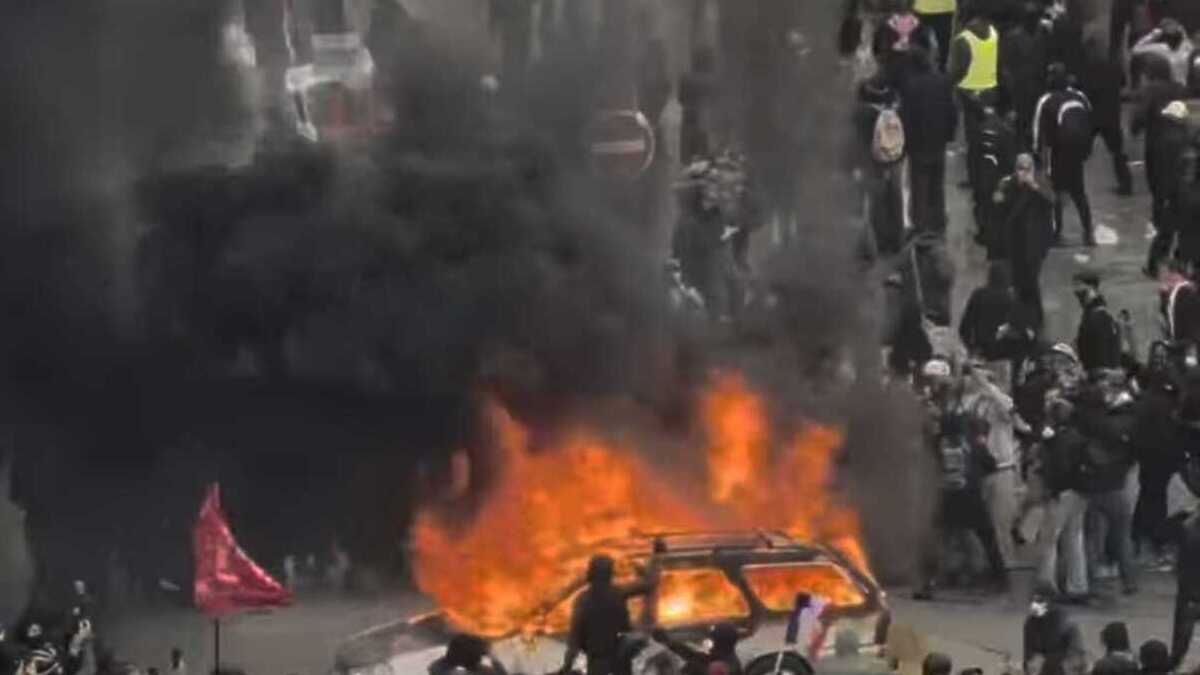
- Nearly 2,400 arrests were reported during nationwide protests that escalated into clashes, looting and damage to public buildings.
- President Emmanuel Macron has pledged action against those responsible and ordered a review of intelligence gathering and police preparedness.
- The unrest has intensified pressure on the minority government ahead of a National Assembly vote on proposed €54 billion budget savings.

France has experienced its worst unrest in years after nationwide protests over the cost of living, declining public services and school conditions escalated into riots, leaving businesses damaged, public buildings burned and thousands of people arrested.
The violence has intensified pressure on President Emmanuel Macron and Prime Minister Sébastien Lecornu’s minority government ahead of a crucial budget vote in the National Assembly.
According to CNBC, nearly 2,400 people were arrested during Saturday’s demonstrations, which drew approximately 550,000 participants across France, including 110,000 in Paris, based on official estimates.
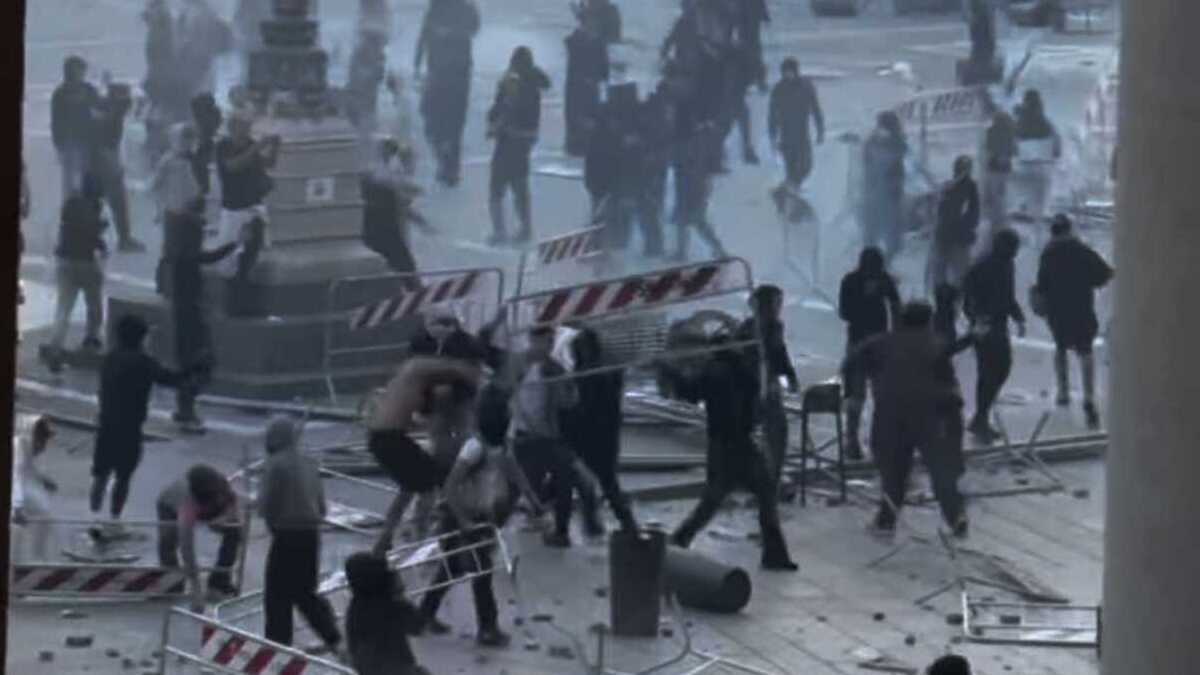
The Interior Ministry also reported that nearly 1,000 police officers and gendarmes were injured as violent groups clashed with security forces, looted shops and attacked public buildings.
The unrest comes as Lecornu’s government seeks €54 billion (US$60.6 billion) in savings in its proposed 2027 budget to reduce France’s growing deficit.
The National Assembly is scheduled to vote on the first part of the bill on Tuesday, amid mounting public opposition to spending cuts and concerns about deteriorating public services.
France’s public debt reached a record €3.6 trillion (US$4.04 trillion) in the second quarter, equivalent to 119 per cent of gross domestic product, according to figures cited by CNBC. Rising borrowing costs have added to the government’s fiscal challenges.
The latest demonstrations followed a month-long student movement over teacher shortages and school conditions, alongside wider discontent among workers and trade unions. While many participants marched peacefully, masked groups and other violent elements targeted police, businesses and government buildings.
Macron vows firm response to rioting
In a televised address on Sunday, Macron condemned the destruction and expressed anger and shame over the violence. He pledged a firm response against those responsible for looting, attacking public institutions and seeking to undermine the republic.
Macron also ordered a review of whether intelligence gathering or police preparedness had failed. He instructed the government to bring together students, teachers, lawmakers, trade unions and business leaders to develop concrete proposals to address the crisis.
The president stopped short of declaring a state of emergency or imposing a curfew. However, he said prefects and mayors would be given powers to prohibit certain gatherings when necessary to protect public buildings and businesses.
PBS NewsHour reported that Macron had held an emergency meeting with senior government officials following Saturday’s violence. He also instructed prefects to coordinate with mayors to strengthen protection for public institutions and businesses in the coming weeks.
French officials have attributed much of the violence to radical far-left activists and criminal groups. Macron described those involved as insurrectionist elements from radical far-left groups joined by criminals.
These descriptions reflect the government’s assessment and do not establish the political affiliations of every person involved.
Historic Limoges town hall nearly destroyed
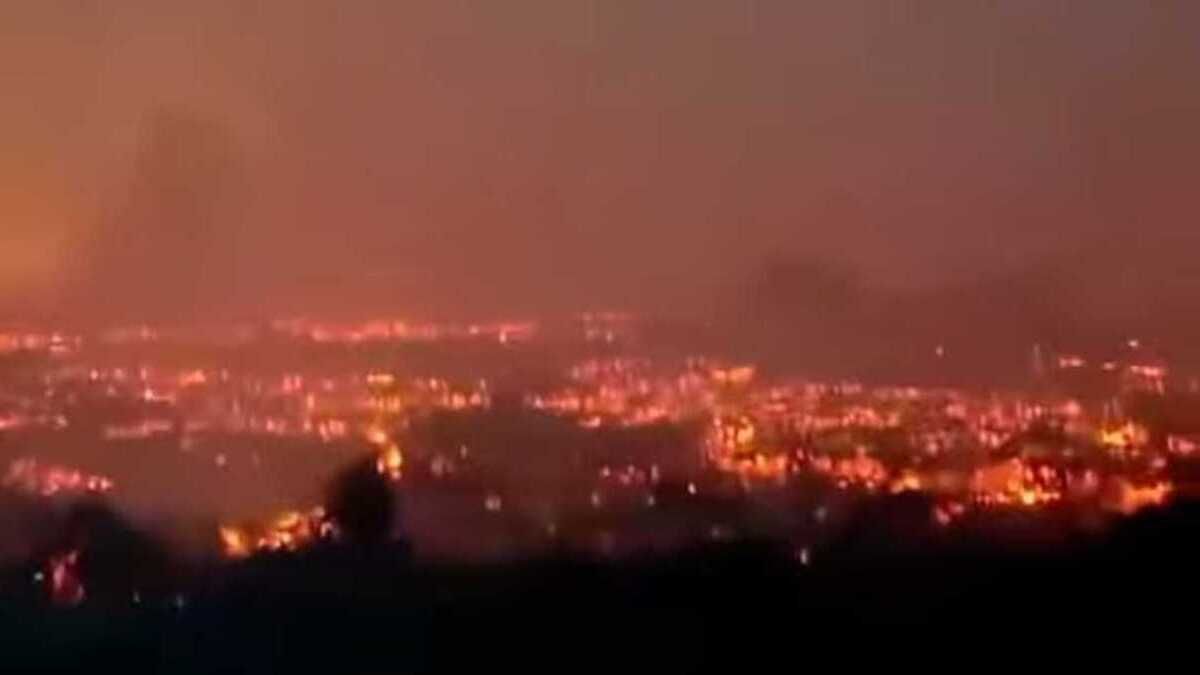
One of the most serious incidents occurred in Limoges, a city in central France, where a fire severely damaged the 19th-century town hall on Saturday, 17 October. The building’s roof collapsed, and its 43-metre clock tower was also destroyed, according to Reuters.
Mayor Guillaume Guérin told Reuters that the attack appeared to have been organised and deliberate. The damage to the historic building prompted comparisons with the destruction caused by the fire at Notre-Dame Cathedral in Paris in 2019.
Haute-Vienne prefect Maurice Barate also condemned the incident, describing it as a deliberate act of destruction.
Other cities also experienced attacks and damage. In Marseille, protesters briefly forced their way into the city hall, while a tourist office in Lyon was set on fire. Masked groups reportedly attempted to enter town halls in Lille and Calais, as well as a police station in Brest.
Hundreds of businesses suffered damage or were looted. Bordeaux Mayor Thomas Cazenave said as many as 100 shops in his city had been targeted, while Interior Minister Laurent Nuñez reported widespread material damage to commercial premises across France.
Economy Minister Roland Lescure pledged support for business owners affected by the riots. Authorities also warned that those responsible for the destruction could face prosecution and be required to pay compensation for the damage.
Renewed clashes and injuries
Tensions continued in Paris on Sunday, when hundreds of protesters gathered at Place de la République amid a heavy police presence. Officers used tear gas and stun grenades to disperse groups involved in clashes, while bicycles and rubbish bins were set on fire.
PBS NewsHour reported that police arrested 855 people in the Paris region, with prosecutors saying 557 remained in custody.
Investigations were also under way into serious injuries sustained during demonstrations, including cases involving a 17-year-old girl who lost an eye in eastern France and a young protester who lost a hand in Saint-Étienne.
One person died after a suspected heart attack during the Paris demonstrations, according to police. The Paris prosecutor’s office opened an investigation, although authorities had not provided further details about the circumstances.
The use of riot-control weapons by police has also come under scrutiny following injuries reported during the demonstrations. The incidents have renewed questions about the policing of large public gatherings and the circumstances in which force is used to disperse protesters.
Political divisions deepen
The unrest has intensified political disputes ahead of France’s next presidential election. Far-right leader Marine Le Pen criticised Macron’s government as exhausted and disoriented, arguing that it appeared unable to respond effectively to the crisis.
Far-left leader Jean-Luc Mélenchon, meanwhile, accused Lecornu of escalating tensions by allowing conditions to deteriorate. Although Mélenchon supported the protesters’ demands, he said looting and destruction had no place in the movement.
The demonstrations have also drawn comparisons with France’s earlier gilets jaunes, or yellow vest, movement, which began in November 2018.
That movement initially mobilised opposition to rising fuel taxes and the cost of motoring before expanding into broader protests over purchasing power, economic inequality and the government’s policies.
The French Interior Ministry reported that 125,000 people took part in the yellow vest demonstrations on 8 December 2018, the fourth consecutive Saturday of mobilisation.
Of those, 10,000 were in Paris. The ministry recorded 1,723 arrests and 1,220 people taken into police custody, while 264 people were injured. It also reported damage to public facilities and businesses.
Another major wave of protests took place in 2023, when demonstrators opposed Macron’s pension reforms, including the increase in the statutory retirement age from 62 to 64.
Reuters reported that the current demonstrations exceeded the yellow vest movement’s peak turnout, although they remained smaller than the crowds involved in the 2023 pension protests.
Government faces pressure over budget
The protests have placed the government under pressure as it seeks to reduce public spending and manage France’s rising debt.
The proposed €54 billion (US$60.6 billion) in savings for the 2027 budget has become a central point of contention as demonstrators raise concerns about living costs, education and access to public services.
The National Assembly’s scheduled vote on the first part of the budget is taking place against this backdrop of unrest. The government must also address the damage to businesses and public infrastructure, while authorities continue investigations into the violence.
Interior Minister Laurent Nuñez has been among the officials responding to the unrest. Prime Minister Lecornu has said the government would not be intimidated by violence, while Macron has pledged to hold those responsible for the attacks accountable.
The economic impact extends beyond the cost of repairing damaged buildings. Looting, fires and disruption to commercial activity have affected businesses in several cities.
The government has pledged assistance to affected business owners, while warning that those responsible for the destruction could face legal consequences.