Flood aftermath leaves Bangkok homes surrounded by rubbish and foul-smelling water
Bangkok residents have shared footage showing rubbish floating around homes as stagnant floodwater begins to smell foul, with local reports documenting similar conditions across several flooded communities.
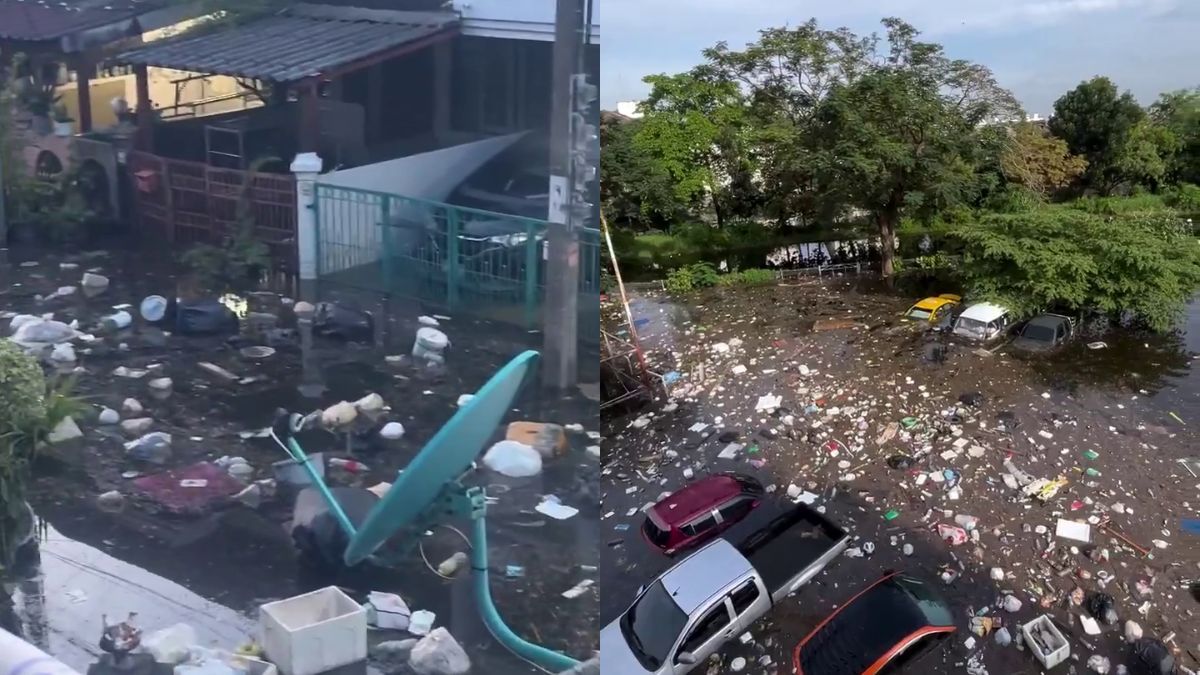

THAILAND: Residents in several parts of Bangkok have shared footage showing rubbish floating around homes as floodwaters remain stagnant, with some reporting increasingly foul-smelling water after days of flooding.
Local reports have documented similar conditions in several flooded communities, while Bangkok authorities have acknowledged difficulties collecting waste in areas where floodwater remains high.
Rubbish piles up as floodwater remains stagnant
In Kheha Rom Klao, eastern Bangkok, residents have been dealing with prolonged flooding, with some areas still submerged several days after heavy rain.
Thai PBS reported on the situation in Kheha Rom Klao on 29 September, saying some areas remained under up to 1.3 to 1.6 metres of water on the fifth day of flooding.
The report also highlighted problems with spoiled food and difficulties accessing homes in deeper flooded areas.
As floodwaters begin to recede in parts of Bangkok, large quantities of waste have also been left behind.
Thai Hyper reported on 30 September that residents had moved household rubbish and flood-damaged items from homes and shops onto roads in Bang Kapi's Lat Phrao 101 area, where workers were collecting the accumulated waste.
The waste problem is not limited to roads.
Residents in flooded communities have also shared footage showing rubbish floating in and around residential areas, while stagnant water has begun to produce unpleasant smells.
Bangkok faces difficulties collecting waste
The Bangkok Metropolitan Administration (BMA) has acknowledged that flooding has made waste collection more difficult.
Bangkok Post reported on 29 September that the BMA was preparing a major clean-up once floodwaters receded and had established a three-stage waste-management framework for Bangkok's 50 districts.
The plan includes measures for handling rubbish during flooding and a larger clean-up operation afterwards.
The BMA also urged residents to separate waste and securely contain infectious waste, sewage and food scraps to reduce contamination.
Thai PBS also reported on the BMA's response, including efforts to deal with floating rubbish in heavily flooded areas.
Officials said deep water in parts of Lat Krabang was making conventional waste collection difficult and that small flat-bottomed boats could be used to transport supplies and rubbish.
Waste disposal adds to drainage concerns
The accumulation of rubbish has also raised concerns about how waste is handled during heavy rainfall and flooding.
Bangkok's official Greener Bangkok campaign has warned that improperly discarded rubbish, particularly plastic and foam, can enter drainage systems and obstruct water flow during heavy rain.
It has also highlighted the link between waste dumped in waterways and drainage problems.
As floodwaters begin to fall in some parts of Bangkok, authorities have started shifting attention towards removing the waste left behind.
The clean-up is expected to remain a major task in areas where water has remained stagnant for several days, particularly in Bangkok's eastern districts.