Peru earthquake damages dozens of homes, schools and health posts in southern Andes
A powerful earthquake struck Peru's Ayacucho region on Thursday, 20 August 2026, injuring at least three people and damaging more than 40 homes, schools, health posts and a hospital. Agencies differed on its magnitude, with the IGP recording 7.2 and the USGS revising its figure to 6.7.
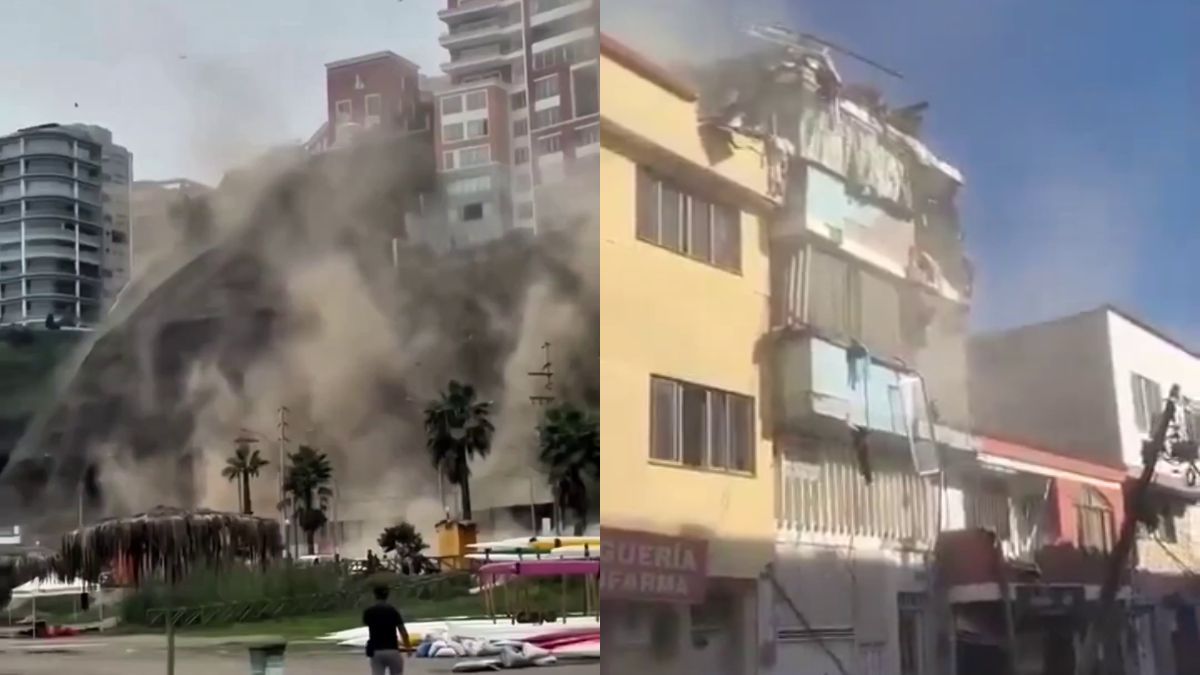

A strong earthquake struck Peru's southern Andes on Thursday, 20 August 2026, injuring at least three people and damaging homes, schools and health facilities across two regions.
The Instituto Geofísico del Perú (IGP) recorded the tremor at 1pm local time (18:00 GMT), placing the epicentre 35 kilometres north of Coracora in Parinacochas province, Ayacucho region.
The IGP put the magnitude at 7.2 and the depth at 108 kilometres, and recorded a maximum intensity of III-IV in Coracora. The United States Geological Survey (USGS) initially reported a stronger event before revising its estimate to magnitude 6.7.
The two agencies also differed on depth, with the USGS placing the hypocentre shallower than the Peruvian estimate. Divergent early readings between seismological agencies are common in the first hours after a large quake.
The tremor was felt across southern and central Peru, including the regions of Ica, Arequipa, Huancavelica, Apurímac, Moquegua and Cusco, as well as in the capital, Lima.
Casualties and injuries
Luis Vásquez Guerrero, head of the Instituto Nacional de Defensa Civil (INDECI), told reporters that two people were hurt while evacuating their homes in Coracora, the capital of Parinacochas province.
Vásquez said both sustained minor injuries from falls during the evacuation and were out of danger after receiving treatment.
Defence Minister Rafael Belaúnde Llosa later told the plenary of Congress that three people had suffered light injuries. The regional government of Ayacucho gave the same figure in its first damage balance.
No deaths had been reported at the time of writing.
Damage to homes and public buildings
Early official figures varied as assessments progressed. Belaúnde told Congress that 22 homes had been affected, alongside six schools and twelve health posts.
The regional government of Ayacucho subsequently reported 33 homes affected in Parinacochas province: twelve in Pullo, seven in Coracora, three in Chumpi and two in Upahuacho.
A further eight homes were reported damaged in Puquio and one in Leoncio Prado, both in Lucanas province. The regional balance also recorded three homes rendered uninhabitable and one destroyed.
INDECI's preliminary report identified twelve damaged homes and a health post in Pullo district, and eight cracked houses in Puquio. A health centre in Pichari, Cusco region, was also affected.
The report noted structural damage to the physical infrastructure of the Cusco Regional Hospital, caused by the propagation of seismic waves.
Local news outlet La Lupa reported that the provincial mayor of Parinacochas had confirmed the collapse of two homes and damage to the 9 de Diciembre school building. The outlet also reported damage to the temple of the Virgen de las Nieves in Coracora.
The Centro de Operaciones de Emergencia Nacional (COEN) recorded 18 population centres affected in Upahuacho district.
Authorities reported an interruption to electricity supply in Nazca province, in the Ica region, affecting approximately 6,000 users.
Vásquez said rockfalls were observed on hillsides near Coracora. The Peruvian Navy ruled out any tsunami threat.
Response and continuing assessment
Vásquez said the damage report was still being updated as brigades and local authorities travelled to more remote areas to carry out the Evaluación de Daños y Análisis de Necesidades (EDAN).
Belaúnde told Congress that the director of INDECI's Ayacucho office and the regional governor had travelled to the affected zone. Rapid intervention groups and specialists were deployed with relief supplies.
The armed forces remained on alert in the region and provided air support along the Pan-American South highway, the minister said.
Teams from Ayacucho's regional risk management office were deployed to affected districts, coordinating response and damage evaluation from a command tent.
Tony Reyes Anampa, mayor of Parinacochas province, appealed to regional and national authorities for support. He noted that buildings north of Coracora are predominantly built of adobe and corrugated iron, making them vulnerable.
The Ministerio de Desarrollo e Inclusión Social (MIDIS) said it had activated safety protocols and evacuated staff from its headquarters in Lima to designated external assembly areas.
Aftershocks
The IGP reported two aftershocks north of Coracora, one of magnitude 4.2 during the afternoon and one of magnitude 4.0 recorded at 20:24 local time. Both had epicentres within 30 kilometres of the town.
INDECI said the magnitude 4.2 aftershock was not perceived by residents and that monitoring of the region was continuing. Monitoring service Asismet identified ten aftershocks of very small magnitude.
Background
Earthquakes are frequent in Peru, which sits on the Pacific "Ring of Fire", a zone of intense seismic and volcanic activity encircling the Pacific basin.
In 2007, a magnitude 7.9 earthquake in a province of the Ica region left close to 600 people dead.
Officials cautioned that damage figures may change as municipalities complete their assessments in the districts where the tremor was felt most strongly.