Evergrande founder sentenced to life in prison as China targets property fraud
Evergrande founder Hui Ka Yan has been sentenced to life in prison after a Chinese court found him guilty of multiple financial crimes. The developer and its property arm were fined 15.82 billion yuan, about US$2.4 billion.
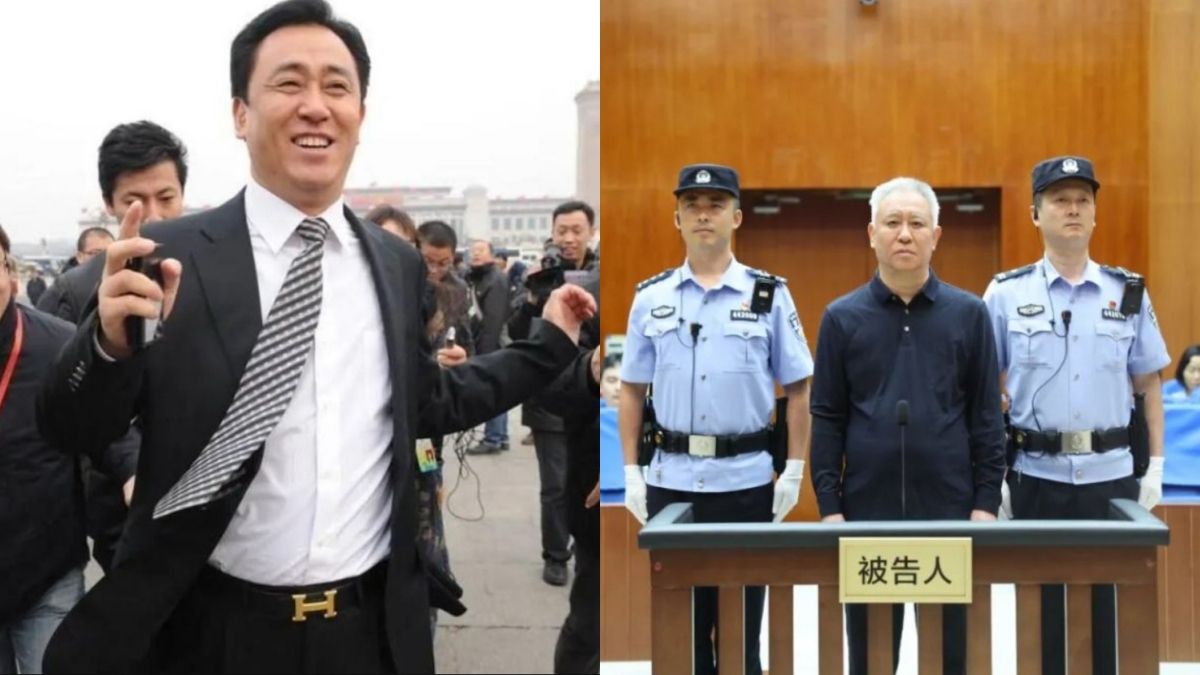
- Evergrande founder Hui Ka Yan received a life sentence and forfeiture of all personal assets.
- Evergrande and its property arm were fined 15.82 billion yuan, about US$2.4 billion.
- The case highlights financial misconduct and wider damage from China’s prolonged property crisis.

China’s Evergrande founder Hui Ka Yan has been sentenced to life in prison after a court in Shenzhen found him guilty of multiple financial crimes linked to the property giant’s collapse.
The Shenzhen Intermediate People’s Court in Guangdong province also ordered the confiscation of Hui’s personal property and revoked his political rights for life.
Evergrande Group was fined 8.82 billion yuan, while its property arm, Evergrande Real Estate, was fined 7 billion yuan.
Together, the penalties total 15.82 billion yuan, approximately US$2.4 billion.
The court said the defendants must continue to repay illegally obtained proceeds, with compensation taking priority over fines and confiscation of assets.
Financial misconduct at the centre of case
The court said Hui and Evergrande engaged in continuous, large-scale financial fraud between 2016 and 2021.
According to the court, the conduct involved inflating assets, concealing liabilities and carrying out several offences involving investors, securities and financial institutions.
The court said the company and Hui were responsible for crimes including illegally taking public deposits, fundraising fraud, securities fraud and the unlawful disclosure of important information.
Hui was also found guilty of illegal use of funds and embezzlement, while the company was convicted of securities fraud.
The court said Evergrande and Hui had also used bribery to obtain control of financial institutions and illegally obtain credit and insurance funds for the group.
It said the offences had caused “particularly serious economic losses” and had significantly damaged the market economy and property rights.
Hui pleaded guilty
Hui, also known as Xu Jiayin in Mandarin, pleaded guilty in April to eight charges, including misuse of funds, fundraising fraud and illegally taking public deposits.
He also admitted charges involving embezzlement and bribery, according to the court.
The case was heard at the Shenzhen Intermediate People’s Court in April, with Xinhua reporting at the time that Hui had expressed remorse and admitted his guilt.
The court said Hui was Evergrande’s actual controller and had overall responsibility for the group’s operations.
It said he controlled several businesses, including Evergrande Real Estate, Evergrande Wealth and Evergrande Nanchang, with interests spanning property, financial services and other sectors.
Five other senior Evergrande executives were sentenced on 20 August 2026 to prison terms ranging from six to 18 years for offences including fraud.
The Shenzhen Intermediate People’s Court and Shenzhen Nanshan District People’s Court also sentenced 56 people involved in related cases.
Their sentences ranged from 18 years to one year and 10 months. Some were also fined or had property confiscated.
The courts ordered the continued recovery of illegal proceeds and repayment of losses where recovered funds were insufficient.
Relatives of defendants and representatives of people who had participated in fundraising schemes attended the sentencing proceedings.
Evergrande’s collapse
Evergrande was once one of China’s biggest property developers and became a symbol of the country’s decades-long housing boom.
The company expanded rapidly as millions of Chinese consumers bought homes and property investment became an important part of household wealth.
Its business model relied heavily on borrowing, however, while it expanded into areas including property management, electric vehicles and football.
Evergrande’s access to credit narrowed after Chinese authorities introduced measures aimed at limiting excessive borrowing and property speculation.
The company eventually defaulted in 2021 after struggling to repay creditors.
Evergrande had accumulated about US$300 billion in liabilities, making its collapse one of the largest corporate failures in China.
The company’s problems became closely associated with a wider property downturn that has continued to weigh on China’s economy.
The failure to repay wealth management products also caused widespread frustration among investors, including lower- and middle-income households.
Regulatory pressure
The criminal case followed earlier regulatory action against Hui and Evergrande.
In 2024, China’s securities regulator fined Hui US$6.6 million and imposed a lifetime ban from the securities market.
The regulator found that Evergrande’s flagship unit had inflated earnings and committed securities fraud.
The action added to pressure on the developer after years of scrutiny over its borrowing, expansion and financial reporting.
From property tycoon to prisoner
Hui rose from modest beginnings in rural Henan province to become one of Asia’s wealthiest businessmen.
He was raised by his grandmother and graduated from the Wuhan Iron and Steel Institute in 1982 before working as a technician for about a decade.
He later moved to Shenzhen during China’s economic reforms and worked in property sales.
Hui founded Evergrande in Guangzhou in 1996. The company expanded rapidly and became China’s largest property developer by contracted sales before listing publicly in 2009.
At his peak in 2017, Hui was Asia’s richest individual, with an estimated fortune of US$45.3 billion.
His wealth fell sharply as Evergrande deteriorated, reaching about US$3 billion by 2023.
Hui was also known for his high-profile public image. He was once described as a “red capitalist” and attended a Communist Party conference in 2012 wearing a distinctive gold-buckled belt.
His diversification into electric vehicles and football reflected ambitions that extended beyond traditional property development.