At least 30 killed as gold mine collapses in Central African Republic
At least 30 miners were killed after an artisanal gold mine collapsed in western Central African Republic on 18 August, with rescuers continuing to search for others feared trapped underground.
- At least 30 miners were killed after an artisanal gold mine collapsed in western Central African Republic.
- Rescuers recovered 30 bodies while searching for others feared trapped underground.
- The collapse highlights ongoing safety risks at artisanal mining sites in the region.

At least 30 miners were killed on Tuesday, 18 August 2026, after an artisanal gold mine collapsed in the western part of Central African Republic, with rescuers continuing to search for others feared trapped underground.
The collapse occurred at a small-scale mining site in the Abba region of Nana-Mambere prefecture, according to Florian Gaguende, one of the surviving miners.
He said search efforts were ongoing to locate additional miners believed to be buried in the debris, though he warned that the likelihood of finding them alive "is getting slimmer".
Souleymane Bi, deputy mayor of the sub-prefecture, said residents and rescue workers had managed to pull 30 bodies from the collapsed site over several hours, while injured survivors were receiving medical treatment.
He appealed for outside assistance to help free those still trapped.
"It is horrible and we are calling for help from organisations and all people of good will to help pull from the hole those who are unable to do so," Bi said.
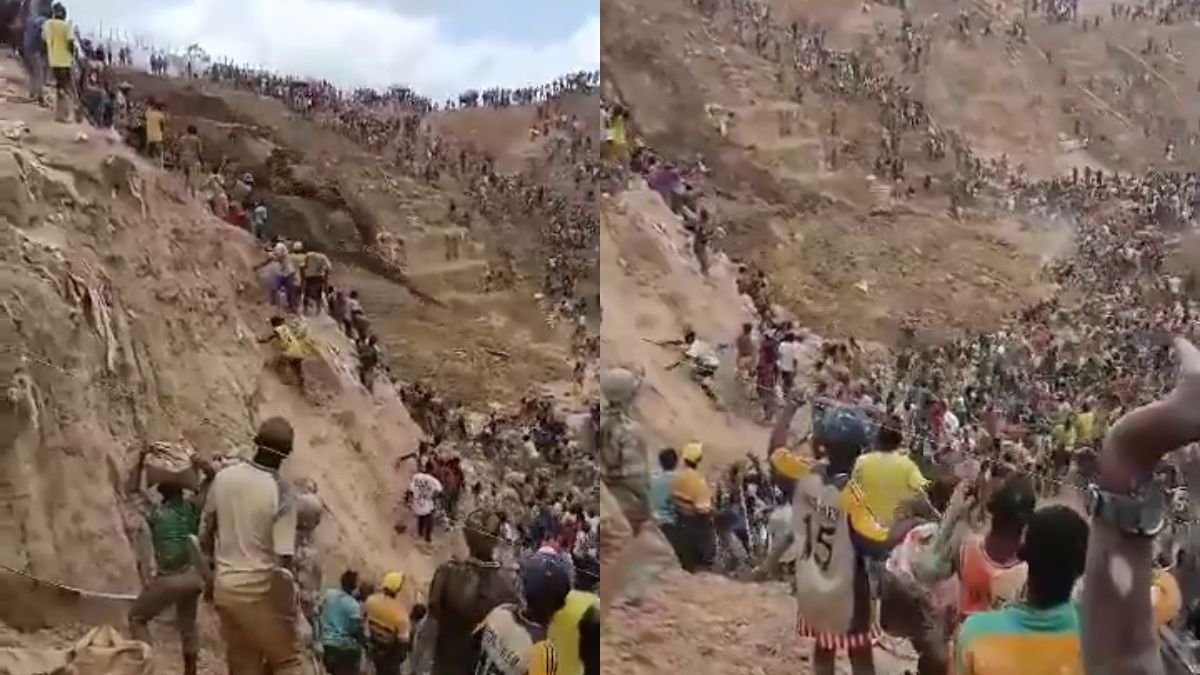
Footage from the scene showed young miners working to extract a body from the pit, as others gathered nearby, calling for help amid chaotic rescue efforts.
Evariste Ngamana, a government representative, said authorities were "working hard to provide relief and assistance" to those affected by the disaster.
A recurring danger
Collapses at artisanal mining sites are not uncommon in this part of Central Africa, where several thousand people work in small-scale gold and mineral extraction, often without adequate safety equipment or structural protections.
The risks associated with unregulated tunnelling have repeatedly led to fatal accidents.
In June 2026, eight miners were killed when an illegal gold mine collapsed in western Central African Republic, near the border with Cameroon.
In May, several dozen people died in a collapse at the Be-Mbari mining site.
A separate incident in mid-March claimed seven lives in the village of Ngourroum.
Eastern Congo landslide
Earlier this year, a landslide triggered the collapse of several mines in eastern Democratic Republic of Congo (DRC), killing at least 200 people.
The disaster struck the Rubaya mining area, which is controlled by the M23 rebel group.
A spokesperson for the group told the Associated Press that the landslide had been caused by heavy rainfall in the region.
The DRC government said afterwards that artisanal mines in the area were typically dug by hand and poorly constructed, contributing to the risk of collapse.
A former miner told the Associated Press that pits in the region are often worked without proper controls or safety measures, sometimes with as many as 500 people digging at a single site.
Because tunnels frequently run parallel to one another, a single collapse can affect multiple pits simultaneously.